Amazon Opens Freight Network to Outside Shippers — Intermodal Impact
Amazon Supply Chain Services now handles third-party freight, distribution, and parcel shipping for manufacturers and retailers, potentially shifting domestic intermodal volume away from traditional 3PLs.

What does Amazon Supply Chain Services offer to outside shippers?
Amazon launched Amazon Supply Chain Services on May 5, opening its freight, distribution, fulfillment, and parcel network to businesses outside its retail ecosystem. The service handles freight transport, warehousing, and last-mile delivery for manufacturers, healthcare companies, automotive suppliers, and retailers — the same infrastructure Amazon built for its own operations over the past two decades.
Procter & Gamble is using Amazon's freight services to move raw materials to production facilities and transport finished goods across its distribution network. 3M has also signed on as an early customer, though Amazon did not disclose contract terms or unit counts.
How this changes domestic intermodal volume
Amazon has moved hundreds of millions of packages through third-party facilities and warehouses over the past three years, supporting hundreds of thousands of independent sellers. Opening that network to outside shippers adds a competitor to the traditional intermodal players — Union Pacific, BNSF, CSX, Norfolk Southern, and the 3PL brokers that coordinate container moves between rail ramps and customer docks.
Peter Larsen, vice president of Amazon Supply Chain Services, said the company is bringing the same cost efficiency, reliability, and speed it built for Amazon customers to any business. The pitch mirrors Amazon Web Services' entry into cloud computing — infrastructure developed in-house, then sold as a service to outside customers.
Analysts quoted in the source material expect the move to boost domestic intermodal volume, though no forecast figures were provided. The mechanism: manufacturers and retailers that previously managed their own freight or contracted with traditional 3PLs may shift volume to Amazon's network if pricing and service levels undercut incumbents.
What Amazon's network includes
Amazon Supply Chain Services covers the full logistics chain: inbound freight from suppliers, warehousing and inventory management, order fulfillment, and last-mile parcel delivery. The service integrates with Amazon's existing fulfillment centers, sortation hubs, and delivery stations — the same facilities that handle Prime orders.
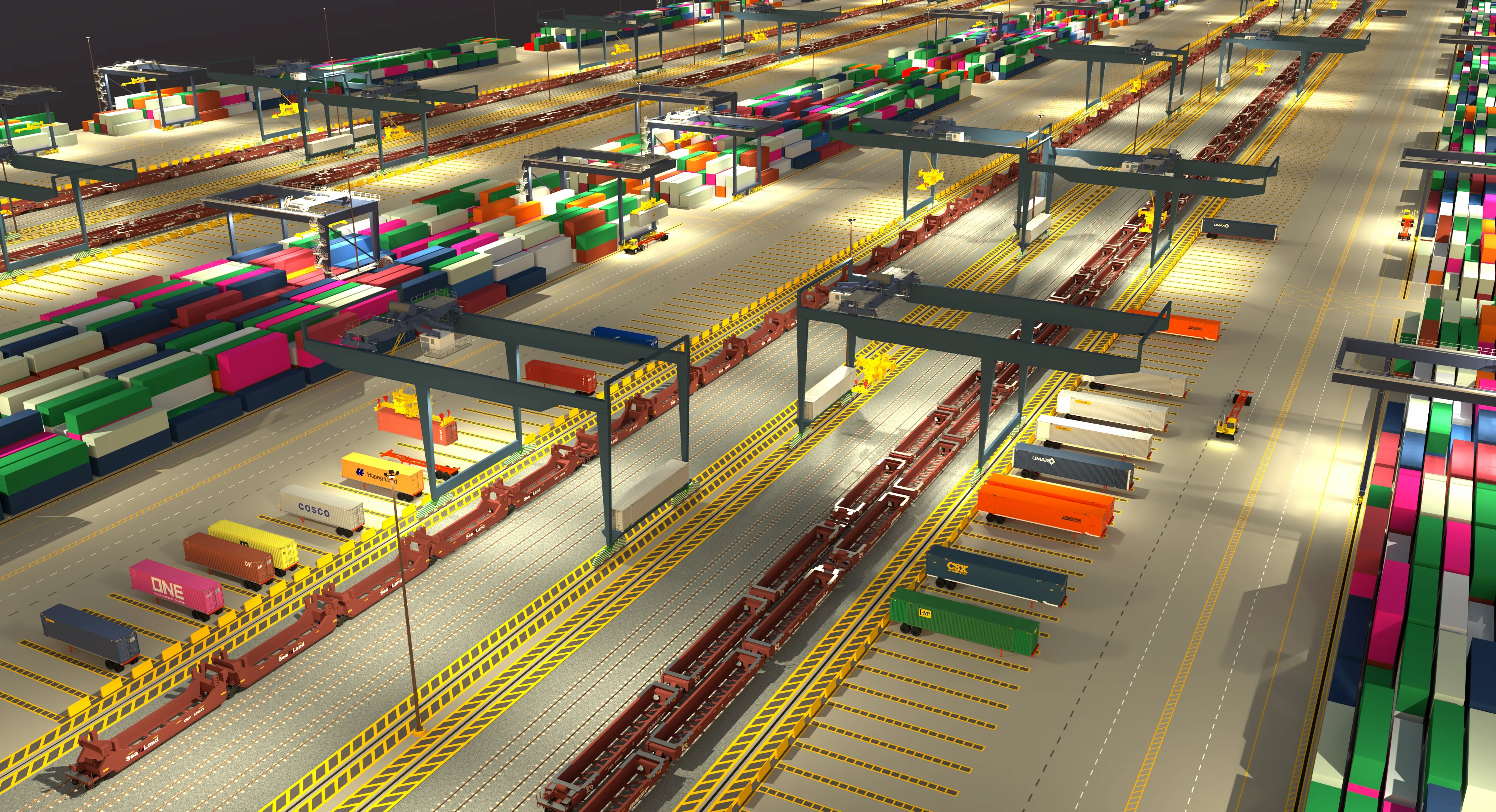
For intermodal specifically, Amazon has been a major customer of domestic container moves for years, contracting with railroads and drayage carriers to shuttle goods from West Coast ports to inland distribution centers. Opening that capacity to outside shippers means those containers could carry third-party freight alongside Amazon's own inventory, improving asset utilization and potentially lowering per-unit costs.
The service also supports sales channels beyond Amazon's retail platform. A manufacturer using ASCS can store inventory in Amazon warehouses, fulfill orders through Amazon's network, and ship to customers buying through the manufacturer's own website or other retail channels — not just Amazon.com.
Equipment and fleet implications
Amazon did not disclose whether it will expand its owned truck and trailer fleet to support the new service, or whether it will continue relying on contracted carriers. The company operates a mix of owned tractors — including a growing electric truck fleet deployed with Einride — and contracted capacity from regional and national carriers.
If ASCS drives significant volume growth, Amazon may need to add containers, chassis, and drayage capacity to handle the increased intermodal moves. That could mean more orders for 53-foot domestic containers and additional contracts with drayage fleets serving major rail ramps.
For small fleets and owner-operators, the question is whether Amazon will open its carrier network to new contracted capacity or keep the service closed to its existing carrier base. The company has historically been selective about which carriers haul its freight, requiring specific insurance coverage, safety scores, and technology integrations.
What traditional 3PLs and intermodal carriers face
The launch puts Amazon in direct competition with third-party logistics providers like C.H. Robinson, XPO, and J.B. Hunt's intermodal division. Those companies coordinate freight moves, manage warehousing, and provide visibility tools for shippers — the same services Amazon is now offering.
Amazon's advantage is scale and integration. A shipper using ASCS gets access to the same fulfillment centers, sortation hubs, and delivery network that handle millions of Prime orders daily. Traditional 3PLs coordinate freight across multiple carriers and warehouses, but they don't own the end-to-end infrastructure.
The risk for railroads and intermodal carriers is that Amazon could negotiate volume discounts that undercut spot rates for smaller shippers, or that Amazon could eventually build its own intermodal terminals and bypass the Class I railroads entirely. The company has not announced plans for rail infrastructure, but it has invested heavily in air cargo with Amazon Air and last-mile delivery with its own van fleet.
When the service is available
Amazon Supply Chain Services is live as of May 5, 2026. The company did not specify geographic coverage or industry restrictions, but early customers include manufacturers and retailers with national distribution networks. Shippers interested in the service can contact Amazon directly; pricing and contract terms were not disclosed in the announcement.
For fleets and owner-operators, the immediate impact depends on whether Amazon expands its contracted carrier base or keeps the service limited to existing partners. Carriers already hauling Amazon freight may see increased volume; those outside the network will need to monitor whether Amazon opens bidding for additional capacity as ASCS scales.