Diesel Drops 14¢ to $5.21, Third Straight Week Down
National diesel fell to $5.21/gal June 8, down 14 cents. Still $2/gal higher than last year, but the first sustained retreat since the Iran war spiked fuel in March.


Why is diesel finally dropping after three months of war-related highs?
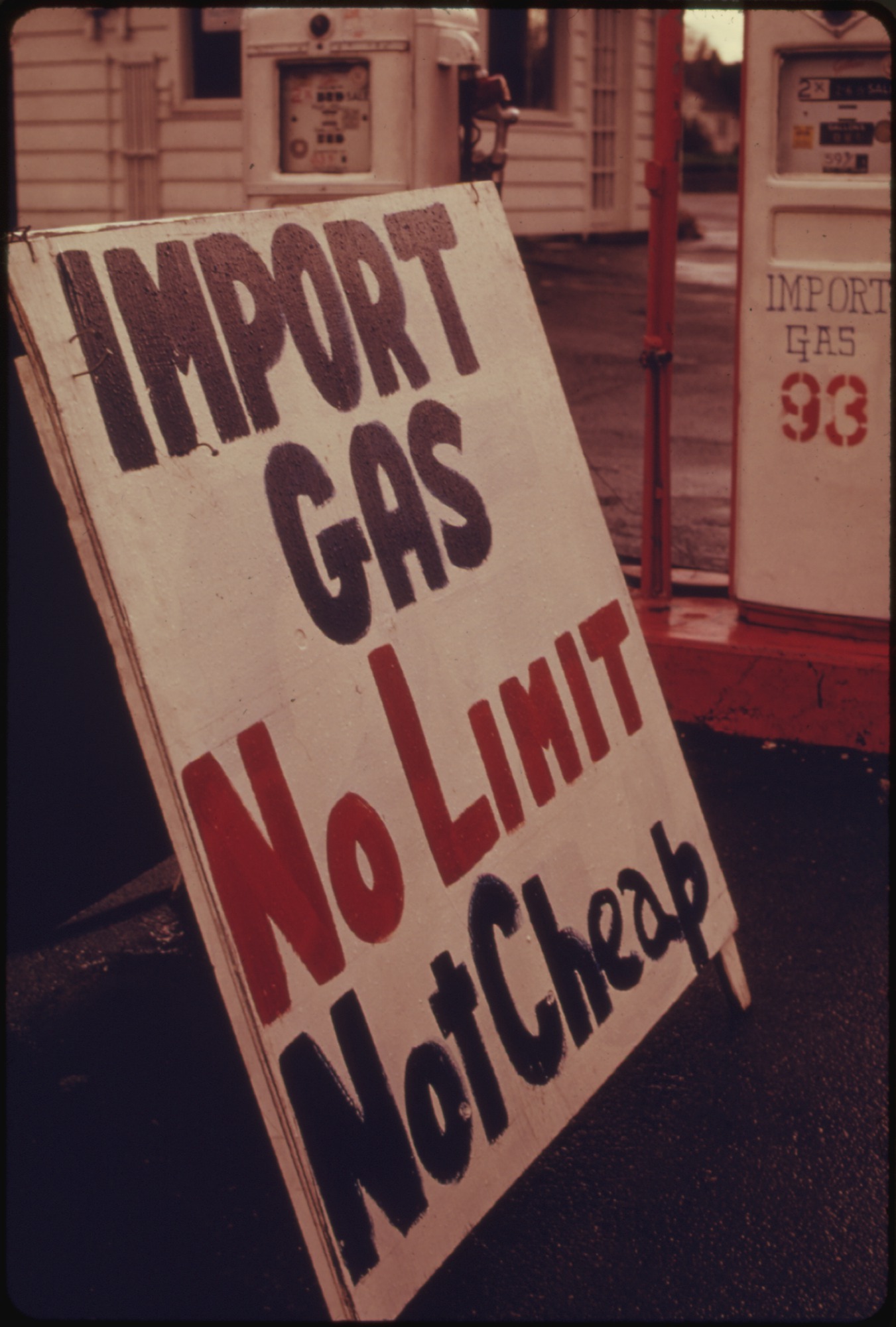
National on-highway diesel fell 14 cents to $5.21 per gallon in the week ending June 8, the third consecutive weekly decline since fuel prices spiked in March when the U.S. war with Iran closed most maritime traffic through the Strait of Hormuz. Gasoline dropped 16 cents to $4.15. The retreat breaks the seasonal pattern: fuel typically climbs in the weeks after Memorial Day as summer driving season begins, but this year the trend reversed as peace talks with Iran inch forward.
Diesel remains nearly $2 per gallon higher than a year ago. A truck running 2,500 miles per week at 6 mpg burns 417 gallons. At $5.21, that's $2,173 in fuel. At last June's $3.25, the same miles cost $1,354. The delta is $819 per truck per week, or $42,588 annually for a single power unit. A 10-truck fleet carries an extra $425,880 fuel bill compared to June 2025.
The Strait of Hormuz closure in March cut off a shipping channel that moves roughly 21 million barrels of crude per day, about 21% of global petroleum liquids consumption. U.S. fuel prices jumped immediately. Gasoline hit $4.48 in early May, up 50% from pre-war levels. Diesel followed a similar arc, peaking in late May before the current three-week slide began.
How long will the drop last?
Peace talks with Iran remain unstable. The Energy Information Administration data released June 8 shows the national average diesel price down 14 cents week-over-week, but the agency offered no forecast on whether the decline will continue. Talks have moved positively some weeks, negatively others. If the Strait reopens, global crude supply would normalize and U.S. fuel prices would likely fall further. If talks collapse, prices could spike again.
Small fleets have no hedge against that volatility. Fuel surcharges lag spot price moves by a week or more, and many contract lanes lock surcharge formulas that don't fully cover rapid spikes. A carrier running a $2-per-mile linehaul rate with fuel at $5.21 nets roughly $1.15 after fuel and variable costs. If diesel jumps back to $5.50, that same lane nets $1.03. The 12-cent margin erosion is the difference between profit and red ink on a 500-mile run.
What the fuel retreat means for settlement statements
Three weeks of declining diesel prices put between 8 and 12 cents per mile back into a carrier's pocket, depending on fuel economy. A truck averaging 6 mpg saves 2.3 cents per mile for every 14-cent drop in diesel. Over 10,000 miles, that's $230. Over a month, $920 per truck. For a 5-truck fleet, the three-week retreat adds roughly $13,800 in monthly margin if rates hold.
Rates have not held everywhere. Spot rates in many lanes softened through May as shippers pulled back on discretionary freight, waiting to see if fuel would stabilize. The national average dry van spot rate excluding fuel surcharge was $1.68 per mile in late May, down from $1.74 in April. Reefer spot fell from $2.12 to $2.06 in the same window. Falling fuel helps, but not if the linehaul rate drops faster.
Contract rates have been stickier. Fleets with annual agreements signed in Q1 locked in higher fuel surcharge floors when diesel was climbing. Those floors now overpay slightly as diesel retreats, giving contract carriers a temporary margin cushion. That cushion evaporates if peace talks fail and diesel spikes again in July.
Regional diesel price variation
The EIA tracks diesel prices by region. The West Coast typically runs 30 to 50 cents higher than the Gulf Coast due to refining capacity and state fuel taxes. California diesel averaged $5.89 per gallon June 8, down 12 cents week-over-week but still $2.14 above the national average. A carrier running California intrastate pays $2,455 per week in fuel for the same 2,500-mile, 6-mpg truck that costs $2,173 nationally. The $282 weekly gap is $14,664 annually.
Gulf Coast diesel averaged $4.87, the lowest in the country. Midwest diesel came in at $5.18, East Coast at $5.31. A fleet running Chicago to Atlanta pays blended fuel costs across those regions. A fleet running Los Angeles to San Francisco pays California prices both ways, with no regional arbitrage.
The bill for a 10-truck fleet if diesel holds at $5.21
A 10-truck fleet running 25,000 miles per week at 6 mpg burns 4,167 gallons. At $5.21, weekly fuel is $21,710. Monthly fuel is $94,073. Annually, $1,128,880. If diesel falls another 50 cents to $4.71 (still $1.50 above last June), the same fleet pays $19,627 weekly, $85,050 monthly, $1,020,600 annually. The savings is $108,280 per year. If diesel spikes back to $5.71, the annual bill climbs to $1,237,160, an extra $108,280 in the other direction.
Small fleets cannot control fuel prices. They can control fuel economy. A 10-truck fleet that improves from 6 mpg to 6.5 mpg at $5.21 diesel saves $3,340 per week, $14,507 per month, $174,080 per year. That margin is larger than the three-week price retreat and immune to geopolitical swings. Spec'ing aero packages, training drivers on throttle discipline, and maintaining tire pressure all move the fuel economy needle more reliably than waiting for peace talks to resolve.