Natural Gas Drillers Shut Wells as Prices Tank Below Breakeven
Elevation Resources CEO says gas losses are eating half the company's revenue. What falling wellhead prices mean for fleets running CNG.

Why are natural gas producers shutting in wells in 2026?
Natural gas producers in Texas are shutting in wells because gas prices have fallen below the cost of production. Elevation Resources CEO Steve Pruett told reporters the company is "losing money hand over fist on gas" as wellhead prices fail to cover drilling and operating costs. Gas represents half of Elevation's product mix, making the price collapse a direct hit to revenue.
The shutdowns mark a reversal from the drilling boom that followed 2024's LNG export buildout. Producers who added capacity expecting sustained demand now face a market where spot gas trades below the marginal cost of new wells in the Permian and Haynesville basins.
For fleets running compressed natural gas trucks, falling wellhead prices typically translate to lower fuel costs at the pump with a 30- to 60-day lag. CNG retail pricing follows wholesale gas with less volatility than diesel tracks crude, because station operators lock in supply contracts and because compression and distribution add fixed costs that don't move with the commodity.
What shut-in wells mean for CNG fuel availability
Shut-in wells reduce total gas supply, but the impact on retail CNG availability depends on which basins curtail production and how much associated gas continues to flow from oil wells. Texas produces roughly 30% of U.S. natural gas. A significant portion comes as a byproduct of oil drilling in the Permian, where operators cannot economically shut in gas without also stopping oil production.
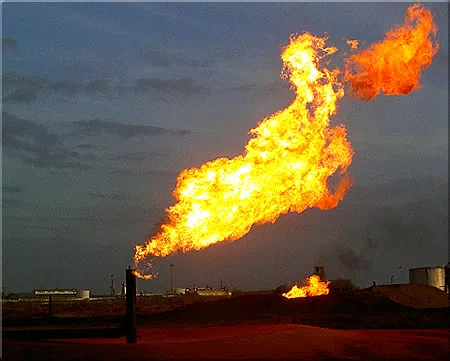
If oil prices remain elevated while gas prices stay depressed, Permian operators will keep drilling for oil and flaring or venting associated gas where pipeline capacity is constrained. That keeps some gas flowing to market even as pure-play gas drillers like Elevation idle rigs.
Fleets with dedicated CNG routes should monitor regional supply. Stations supplied by local distribution companies with long-term contracts face less risk of supply interruption than those sourcing spot gas. The 2023 polar vortex showed how quickly wholesale gas can spike when weather tightens supply, even when wellhead prices are low in aggregate.
How low gas prices change the CNG payback math
Cheaper natural gas shortens the payback period on CNG truck conversions and new CNG tractor purchases. A Class 8 tractor running 100,000 miles per year at 6 mpg diesel-equivalent burns roughly 16,700 gallons. At $1.50 per diesel gallon equivalent for CNG versus $3.80 for diesel, the annual fuel savings approach $38,000 per truck.
That math assumes stable pricing. The risk is that gas prices recover faster than diesel if producers cut enough supply. Elevation's shut-ins and similar moves by other drillers reduce the glut that has kept gas cheap since late 2025. If LNG export demand picks up or if a cold winter drains storage, wholesale gas could spike back above $4 per MMBtu, erasing much of the CNG cost advantage.
Small fleets considering CNG should model fuel cost scenarios across a range of gas prices, not anchor to today's lows. Fleets that diversify fuel sources hedge the risk that any single commodity swings against them. A mixed fleet running diesel, CNG, and renewable diesel spreads exposure.
The diesel-gas price spread and what it signals
The current diesel-gas spread reflects two separate supply stories. Diesel prices remain elevated because refinery capacity is tight and because export demand for U.S. distillate stays strong. Natural gas prices have collapsed because domestic production outran pipeline and LNG export capacity, leaving producers with more gas than they can move to market.
When producers shut in wells, they reduce future supply. But the lag between shut-ins and tighter markets can run six to twelve months, because storage levels remain high and because associated gas from oil drilling continues to flow. Fleets should expect CNG fuel costs to stay low through the third quarter of 2026, with upside risk in the fourth quarter if storage draws down ahead of winter heating demand.
The diesel side of the equation is less clear. If economic activity slows and freight volumes stay soft, diesel demand could weaken enough to pull prices down even without new refinery capacity. That would narrow the diesel-CNG spread and reduce the fuel-cost advantage of running natural gas trucks.
What this means for a 10-truck fleet weighing CNG
A 10-truck fleet running 1 million miles per year would save roughly $230,000 annually on fuel by switching from diesel to CNG at current prices. That assumes $3.80 diesel, $1.50 CNG, and 6 mpg diesel-equivalent fuel economy. The capital cost of converting 10 trucks or buying 10 new CNG tractors runs $300,000 to $500,000 depending on whether the fleet builds its own fueling station or relies on public infrastructure.
Payback in 18 to 24 months looks attractive. The risk is that gas prices recover before the fleet recoups the investment. Elevation's shut-ins and similar moves by other producers signal that the current price floor won't hold indefinitely. Fleets with dedicated routes and access to reliable CNG fueling should move faster. Fleets running variable lanes or relying on sparse public CNG networks face higher operational risk and should model longer payback periods.
The other variable is resale value. CNG trucks hold value better in markets with established fueling infrastructure. A fleet running the Texas Triangle or Southern California can expect stronger resale than one operating in regions where CNG adoption remains thin. Routes with predictable mileage and return-to-base operations are where natural gas trucks pencil out most reliably, because they eliminate range anxiety and let the fleet control fueling costs.