Supreme Court broker ruling opens truck lessors to same liability
Montgomery v. Caribe Transport killed broker immunity on May 14. The same reasoning applies to Ryder, Penske, and every commercial lessor that hands trucks to carriers without checking their safety records.


Did the Supreme Court just expose truck leasing companies to crash liability?
Yes. On May 14, 2026, the Supreme Court ruled 9-0 in Montgomery v. Caribe Transport II that brokers can be sued for negligently selecting unsafe carriers. The decision killed the federal preemption defense brokers had used for a decade. What nobody noticed: commercial truck lessors (Ryder, Penske, Idealease, Enterprise Truck Rental) never had that defense. They've been standing behind a different statute, the Graves Amendment, which has never provided blanket immunity. The Supreme Court's reasoning in Montgomery applies to lessors with more force than it ever applied to brokers.
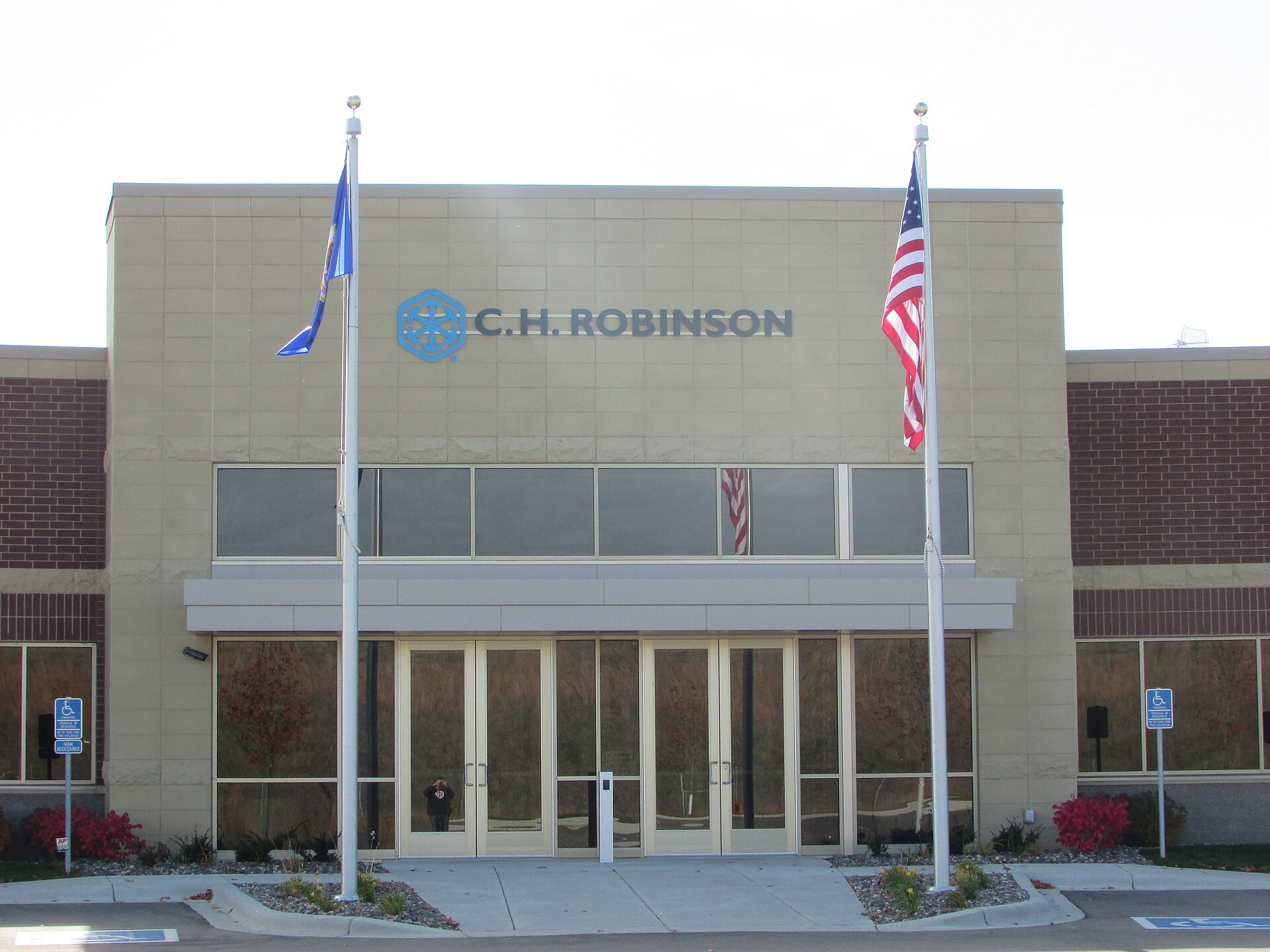
Shawn Montgomery lost his leg in 2017 when a Caribe Transport truck struck him on an Illinois highway. C.H. Robinson, the largest freight broker in the country, had arranged the load. At the time Robinson selected Caribe, the carrier held a conditional safety rating from FMCSA with documented deficiencies in driver qualification, hours of service, and vehicle maintenance. That information sits in a public federal database anyone can query in under a minute. The Supreme Court held that a jury may ask why no one at Robinson did.
Justice Barrett wrote the opinion. The Court ruled that state-law claims accusing a broker of negligently hiring an unsafe carrier are not preempted by federal law because requiring a broker to exercise ordinary care in choosing which trucking company hauls a load concerns motor vehicle safety, and Congress left motor vehicle safety to the states.
What wall were brokers standing behind before Montgomery?
Brokers relied on the Federal Aviation Administration Authorization Act of 1994, a deregulation statute that preempts state laws related to the price, route, or service of a motor carrier or broker. For years, brokers argued that a lawsuit accusing them of negligently selecting a carrier was really a state trying to regulate their services, and therefore federally barred. Several federal appeals courts agreed. The result was a defense that worked at the motion-to-dismiss stage, before discovery, before a jury, before anyone examined what the broker actually knew.
That wall came down May 14. The Court held that the statute's safety exception, which preserves state authority over motor vehicle safety, saves these claims. A duty of care in selecting the company whose trucks will be on the highway plainly concerns those trucks.
What wall are truck lessors standing behind?
The Graves Amendment, a provision slipped into a 2005 highway bill after jury verdicts in vehicle rental cases grew large enough that at least one major rental company threatened to pull out of entire states. The amendment, codified at 49 U.S.C. § 30106, preempts state laws that made vehicle owners vicariously liable for their renters' driving. Before Graves, states like New York and Florida held the owner of a vehicle responsible for the negligence of whoever was driving it, simply by virtue of ownership. Graves ended that for companies engaged in the trade or business of renting or leasing motor vehicles.
The difference between the two walls is the entire story. Graves protection applies only where there is no negligence or criminal wrongdoing by the owner. The shield covers liability based solely on ownership. It has never covered the leasing company's own conduct. Negligent maintenance claims survived Graves. Negligent entrustment claims survived Graves. A claim that the rental company itself failed to exercise reasonable care in the transaction was never preempted, not in 2005 and not today.
Brokers had categorical immunity and just lost it. Lessors never had categorical immunity at all. The door in the Graves Amendment has been standing open for twenty years.
Why hasn't anyone sued a truck lessor for negligent entrustment before?
What protected the commercial leasing industry through those twenty years was not the statute. It was the absence of any developed standard for what reasonable care means when the customer is not a college kid renting a box truck but a federally regulated motor carrier with a public safety record. Nobody had authoritatively said what a leasing company is supposed to check.
On May 14, the Supreme Court said what a broker is supposed to check. The migration of that standard across the parking lot is now just a matter of pleading.
The existing case law on negligent entrustment in the rental context was built for consumer transactions. Its questions are consumer questions: Did the renter present a valid driver's license? Was the renter visibly intoxicated? Was there some obvious, observable incompetence at the counter? Courts have generally held the bar there low. At least one California decision concluded that a rental company has no duty even to check a customer's driving history before handing over the keys.
Put a motor carrier on the other side of the counter and watch every one of those premises fail. A motor carrier customer is not an information void. It carries a USDOT number that unlocks, in public federal databases, its safety rating, its roadside inspection history, its out-of-service rates, its crash record, its driver and vehicle violation patterns, its insurance filing history, its authority history including every revocation, and its age as a regulated entity. This is the data the Supreme Court just held put C.H. Robinson on notice about Caribe Transport. The conditional safety rating that anchored Montgomery's claim was one lookup away.
Why are lessors in a worse position than brokers?
Consider what each upstream party actually contributes to a catastrophic crash.
The broker matches freight to a carrier for a single load, often in minutes, often through automated systems, often without any relationship beyond the transaction. Justice Kavanaugh's concurrence in Montgomery, joined by Justice Alito, made a point of this: brokers may not always, or even often, be in a good position to objectively assess the relative safety of different trucking companies. He predicted that brokers who ask hard questions and arrange transportation with reputable carriers should be able to defend these suits successfully.
Now apply the same knowledge and proximity analysis to a full-service commercial lessor.
The lessor does not touch the carrier for one load. It signs a lease term measured in years. It runs a credit underwriting process on the carrier before a unit changes hands, which means it already examines the customer more closely than any broker does when evaluating a carrier for a tender. Under a full-service lease, the lessor performs the maintenance on the vehicle, which means its own technicians see the condition of the equipment, the abuse, the deferred repairs, the miles. In many arrangements, the lessor's systems see telematics data from its own units. The lessor has a continuous, contractual, revenue-bearing relationship with the carrier for the life of the lease, and a repossession right that gives it leverage no broker ever had.
The lessor supplies the instrument itself. The Supreme Court's holding turned on the phrase "with respect to motor vehicles," which the Court read to mean "concerns motor vehicles." A broker's carrier selection indirectly concerns motor vehicles: it determines which trucks haul a load. A lessor's decision concerns a motor vehicle in the most literal sense the English language offers. The truck involved in the crash is the lessor's. Its name is on the title.
If a duty of reasonable care follows knowledge, proximity, and control of the instrumentality, then the entity with the deepest knowledge, the longest relationship, and legal title to the vehicle sits above the broker in the responsibility chain, not below it.
What does reasonable care look like for a truck lessor after Montgomery?
The question a jury will eventually be asked, in some courtroom, in some state, is simple: if a broker exercising ordinary care must consult the public safety record before tendering a single load to a carrier, what does ordinary care require of the company that leased that carrier the truck itself, for three years, after running a credit check but not a safety check?
At the transactional end (a same-day rental of a single unit to an established carrier), reasonable care plausibly looks like what a competent broker's minimum screen now looks like post-Montgomery: verify active operating authority, verify insurance on file, and confirm the carrier is not operating under an out-of-service order or an unsatisfactory or conditional rating. That is minutes of work against free public data, and the technology to automate it at the counter has existed for years.
At the relationship end (a multi-unit, multi-year, full-service lease), the analysis deepens because the knowledge deepens. The lessor is already underwriting the carrier's finances. A safety underwrite alongside the credit underwrite would examine authority age, inspection and out-of-service history, crash record, and rating status at origination, and, critically, at renewal, because the lessor is one of the few upstream parties with a natural periodic checkpoint and a contractual remedy. A carrier whose safety profile collapses in year two of a lease is a carrier the lessor is actively maintaining trucks for while the public record deteriorates. The broker sees the carrier once. The lessor watches it decay in its own service bays.
What should carriers expect from lessors now?
Carriers leasing equipment should expect the same vetting brokers now face. That means lessors will pull your safety rating, your roadside inspection history, your out-of-service rates, and your crash record before signing the lease. If you're renewing a multi-year lease, expect the lessor to pull those records again at renewal. A carrier with a deteriorating safety profile may find its lease non-renewed or its rates adjusted.
For carriers with clean records, this is not a problem. For carriers operating under conditional or unsatisfactory ratings, or carriers with high out-of-service rates, the pool of willing lessors may shrink. The same dynamic brokers now face when selecting carriers will migrate to the leasing counter.
The freight brokerage industry has spent the last two months scrambling to formalize carrier selection criteria and document their vetting. The commercial leasing industry has not. The Supreme Court's reasoning in Montgomery does not stop at the broker's desk. It follows the truck to the entity that handed it over.