Volvo VNL Autonomous Runs Dallas-Houston Route With No Driver Onboard
AVI-SPL launched commercial autonomous freight operations in June 2026 using Volvo's self-driving VNL and Aurora's TMS. Safety drivers come out Q1 2027.

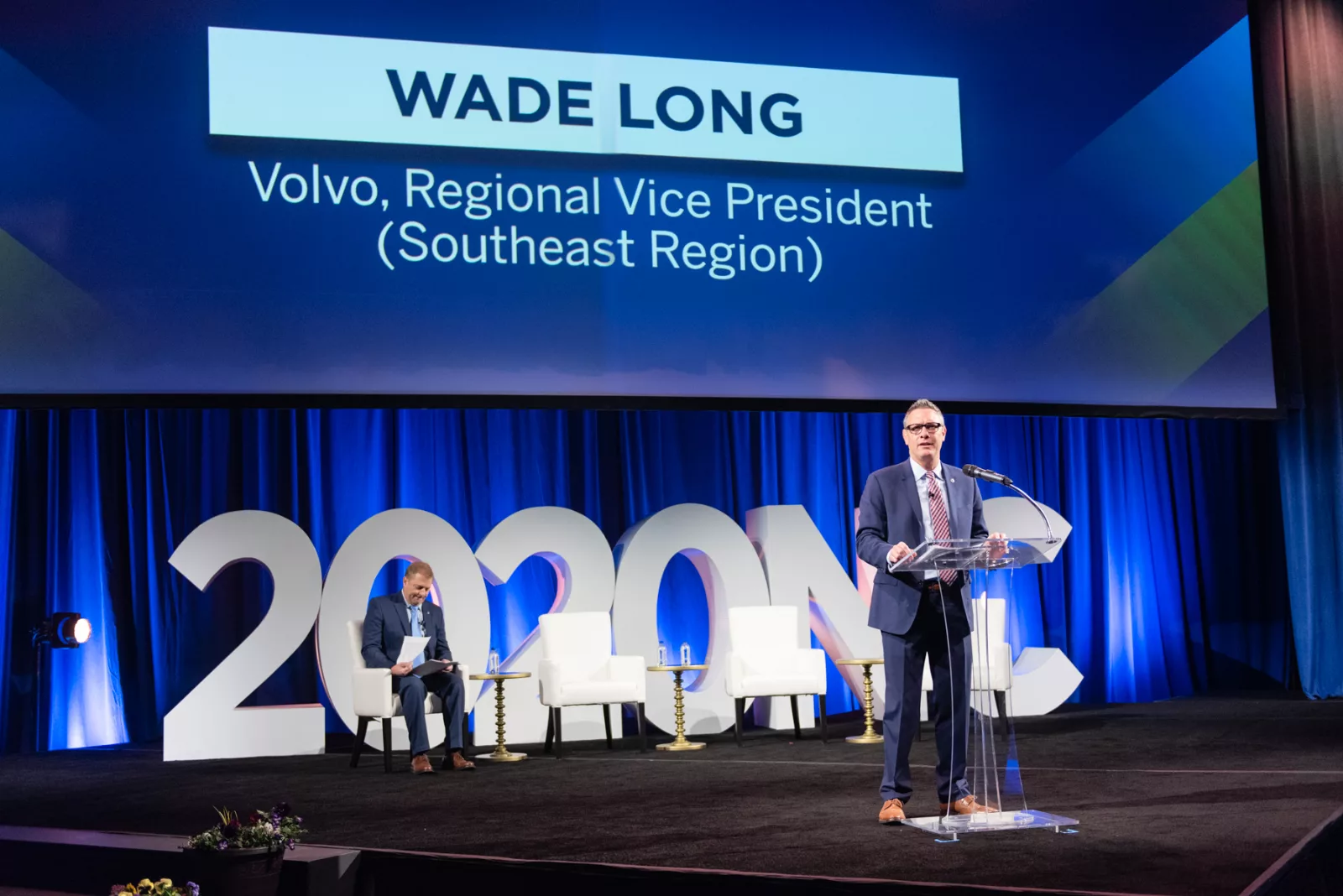
AVI-SPL began running autonomous freight between Dallas and Houston the week of June 8, 2026, using Volvo VNL Autonomous tractors equipped with Aurora Innovation's self-driving system. The 239-mile route carries audio-visual equipment inbound and end-of-life electronics on backhauls. Safety observers ride onboard now. Volvo Autonomous Solutions plans to remove them and run fully driverless in Q1 2027.
When does the Volvo VNL Autonomous go fully driverless?
First quarter 2027. Aurora Innovation confirmed in a June LinkedIn post that trucks will deploy with nobody behind the wheel in Texas starting Q1 2027. Current operations include safety observers who monitor the system but do not drive. Jeremy Codiroli, vice president of global supply chain at AVI-SPL, said the observers "are just kind of observing" to make sure everything runs according to plan.
What hardware does the Volvo VNL Autonomous use?
The Volvo VNL Autonomous is assembled at Volvo's New River Valley plant in Dublin, Virginia. According to Volvo Autonomous Solutions, the truck has redundant systems across steering, braking, communication, computation, power management, energy storage, and vehicle motion management. Level 4 automation does not legally require redundancy, but Volvo built it in from the start. The Aurora Driver TMS platform handles routing and dispatch.
How does AVI-SPL use the autonomous route?
AVI-SPL runs a two-way commercial route. Inbound trucks pick up audio-visual electronics from Dallas vendors and deliver to Houston customer installations. Return trips haul end-of-life electronics from Houston back to Dallas, where recycling partners recover precious metals. Codiroli called it a "blended approach" to cargo utilization that fits the company's sustainability goals.
Making autonomous trucking work required internal restructuring. AVI-SPL's centralized global supply chain team analyzed how autonomous operations would affect the entire network. One major shift: consolidating shipments more aggressively to maximize truckload value rather than shipping frequent smaller loads. Codiroli said you cannot just flick a switch and start using autonomous trucking. It takes internal coordination, vendor coordination, and customer coordination.
What is the economic case for autonomous trucks?
Asset utilization. Trucks without human drivers are not bound by hours-of-service regulations, enabling around-the-clock operation. Volvo Autonomous Solutions stated in its June 10 Capital Markets day presentation that the most important impact is doubling asset utilization. The company called it a change the industry cannot ignore.
Codiroli sees autonomous trucking as a risk management solution for driver headcount problems three to five years out. He said the supply chain team looks ahead and tries to solve future problems now. Chief among those problems: driver hiring and retention difficulties. Driver retention tightened for the first time in 40 months earlier this year, according to Covenant Transport.
How fast will autonomous trucking scale?
Codiroli believes autonomous trucking could account for up to half of all highway miles traveled within the next five to ten years. He compared the magnitude of impact to the invention of the plane, calling it one of the biggest improvements to supply chain strategy in decades. He said the only carriers able to ship on time and on schedule will be those that have already embraced autonomous shipping technology and integrated it into their supply chain.
AVI-SPL announced what it had already accomplished rather than what it hoped to do. Codiroli said a lot of companies, especially with AI, announce future plans. AVI-SPL wanted to make a point of saying this is real life, not a dream.
What this means for small fleets
The Dallas-Houston route is a proof case for Level 4 autonomous operations on a defined corridor. The hardware is production-spec Volvo VNL tractors with factory-installed Aurora systems, not prototypes. Volvo's redundancy approach addresses the failure-mode question that has kept autonomous trucks in pilot purgatory. The Q1 2027 timeline for removing safety observers is the first firm date from a major OEM for fully driverless commercial freight in the U.S.
Small fleets will not buy these units outright in 2027. The early model is shipper-owned or leased capacity, not owner-operator spec. But the asset-utilization math is the same math that has driven every previous wave of fleet consolidation. If a truck can run 22 hours a day instead of 11, the per-mile cost advantage is structural. Fleets that cannot match that utilization will lose bids on long-haul lanes where autonomous trucks can legally operate. The question is not whether autonomous trucks will take share. The question is how fast the regulatory map opens up and how many corridors look like Dallas-Houston by 2030.