When Wind Pushes Your Trailer, Park It — Winter Driving Advice
Minnesota troopers and veteran drivers say the moment your trailer gets shoved by wind or your gut says conditions are sketchy, you're already past the safe threshold.


When should an owner-operator pull off in a winter storm?
The moment your trailer is getting pushed around by wind, you're done driving — that's the storm telling you to park, according to veteran drivers and Minnesota State Patrol troopers interviewed by Trucking Info. If your gut says conditions are sketchy, you're already past the safe threshold.
Minnesota State Patrol Sergeant Jesse Shaw says troopers are seeing more drivers following too closely — "drafting" — in winter conditions. When visibility drops during a snowstorm, drivers can't see far enough ahead to stop, and they don't have the reaction time or distance they need if they do have to brake.
When road conditions deteriorate and an incident occurs, drivers tend to panic-brake. In a tractor-trailer, that action can trigger jackknifing and skidding, which can lead to accidents with stunning speed.
The 20-mph hazard-light mistake
Drivers often think they're being safe by crawling along at 20 mph with hazards on in storms, according to veteran driver Hendrickson (first name not provided in the source). But if your trailer is getting pushed around by the wind, you're not "pushing through" the storm — that's the storm telling you it's time to get off the road.
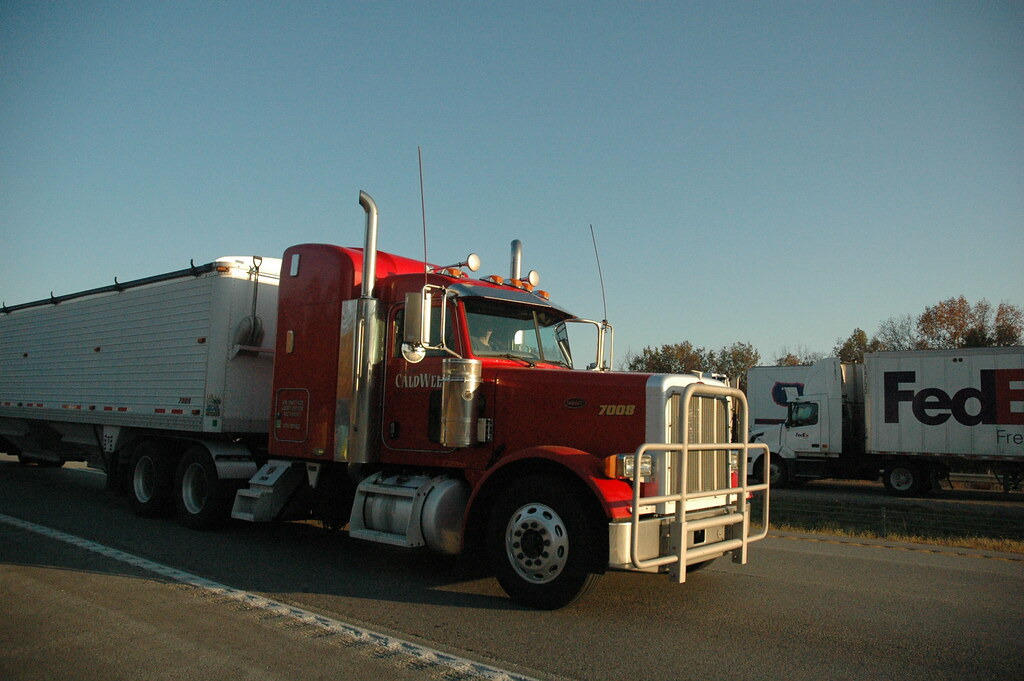
Lightly loaded commercial vehicles are especially vulnerable. The combination of low weight and high crosswind area means a gust can shove the trailer into the next lane before the driver has time to correct.
What to do when conditions turn
"The hard truth is that if your gut says things are sketchy, it's already too late," Shaw says. "At that point, your job is to put space between you and other vehicles, buy time, and get out of the danger zone as quickly as possible."
That means:
- Increase following distance immediately. If you're drafting, you've already eliminated your margin.
- Find the next exit. Don't wait for conditions to improve — they won't while you're moving.
- Park. A truck stop, rest area, or wide shoulder with visibility is better than becoming the next link in a pileup chain.
The cost of a night parked is a hotel room or a sleeper berth and lost miles. The cost of pushing through is a jackknifed trailer, a totaled load, a CSA crash on your record, and an insurance claim that will follow you for three years. The math is not close.
What this means for your next winter run
If you're running light or empty through wind-prone corridors — I-80 across Wyoming, I-90 through Montana, I-29 through the Dakotas — check wind forecasts before you roll. The National Weather Service issues high-wind warnings for commercial vehicles when sustained winds hit 40 mph or gusts reach 58 mph. Those thresholds exist because a 53-foot dry van becomes a sail at that point.
When your trailer starts moving on its own, the decision is already made. Park it.