Horizon Targets Class 8 BEV Tractor in 18 Months to Challenge Tesla Semi
The medium-duty EV maker plans to ship a Class 8 battery-electric tractor by late 2027, expanding beyond its current Classes 3-7 lineup.


When does Horizon plan to ship its Class 8 BEV tractor?
Horizon intends to begin production of a Class 8 battery-electric tractor within 18 months, putting first deliveries in late 2027 or early 2028. The company currently manufactures battery-electric trucks in Classes 3 through 7 but has not previously offered a heavy-duty sleeper or day-cab tractor.
The move puts Horizon in direct competition with the Tesla Semi, which began customer deliveries to PepsiCo in December 2022 and has since expanded to a handful of other fleets. Tesla has not disclosed production volume, battery capacity options, or retail pricing for fleets outside its early-adopter program. Horizon has not released specifications for its Class 8 design, including battery size in kilowatt-hours, estimated range, charge time, or MSRP.
What Horizon sells today
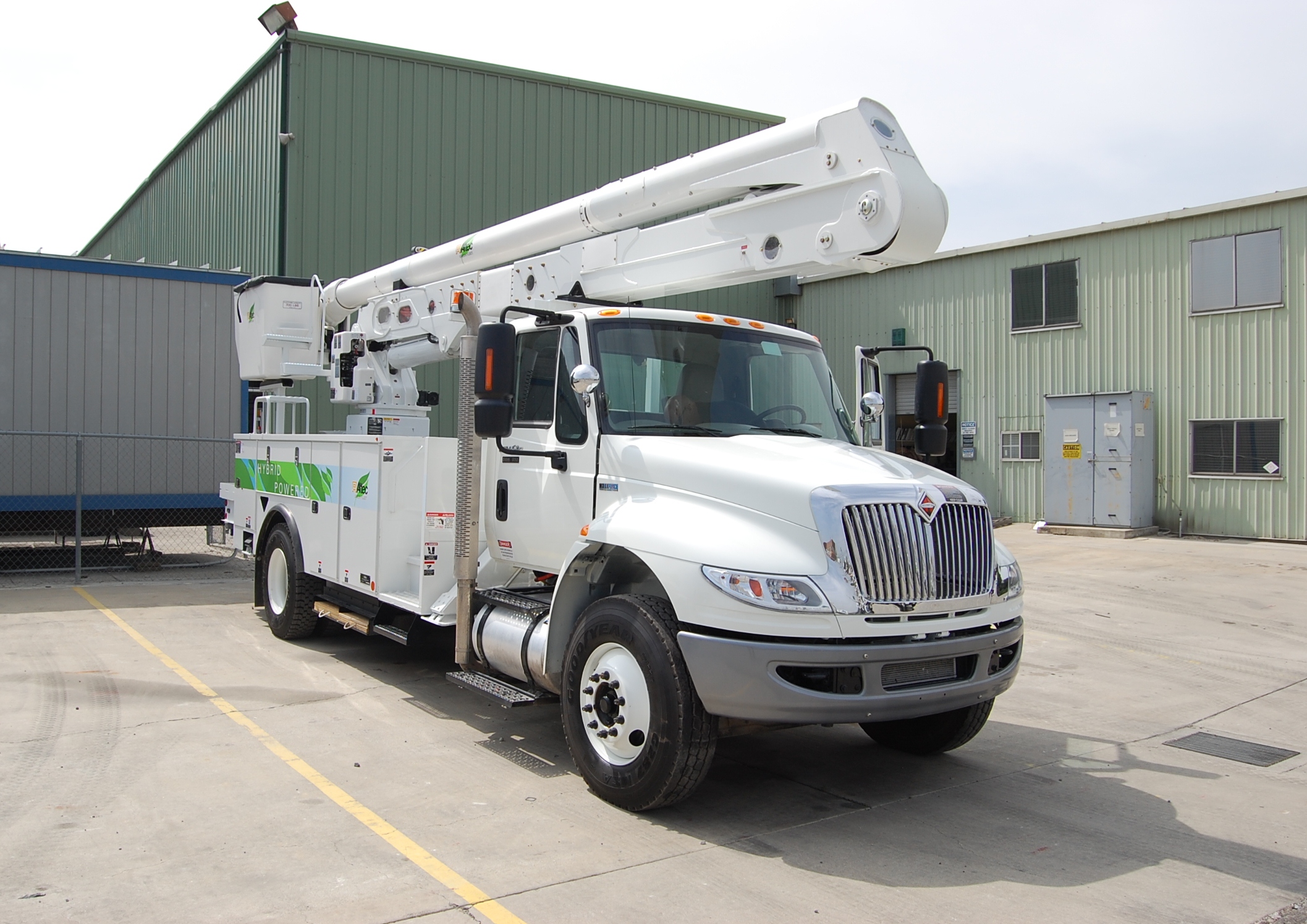
Horizon's existing portfolio covers medium-duty applications. The company offers battery-electric box trucks, flatbeds, and vocational chassis in weight classes that typically handle regional delivery, municipal service, and construction-site work. These units compete with offerings from BYD, Peterbilt (Model 220EV), Freightliner (eM2), and International (eMV). Horizon has not disclosed total unit sales or fleet-customer names.
The jump from Class 7 to Class 8 requires a step change in battery capacity, cooling architecture, and charging infrastructure. A regional Class 8 day cab typically needs 300 to 500 kWh to cover 200 to 300 miles between charges. A sleeper tractor for longer hauls pushes that figure above 700 kWh, as seen in the Tesla Semi's reported 500-mile configuration. Horizon has not stated which duty cycle it will target first.
Class 8 BEV adoption remains narrow
Battery-electric Class 8 tractors account for a fraction of 1 percent of new heavy-duty truck sales in North America. Tesla, Nikola (battery version of the Tre), Volvo (VNR Electric), Freightliner (eCascadia), and Peterbilt (579EV) have all delivered units to fleets, but total volume across all OEMs remains below 2,000 units per year. High upfront cost, limited charging infrastructure outside California, and range constraints on long-haul lanes have kept adoption confined to dedicated regional routes with predictable mileage and access to depot charging.
The Volvo D13 engine meets the 2027 EPA NOx standard, which may trigger a prebuy cycle for diesel tractors in late 2026 and early 2027. That window could complicate Horizon's launch timing if fleets accelerate diesel orders to avoid first-year emissions hardware and lock in lower purchase prices before the new standard takes effect.
What small fleets need to know
Horizon has not announced pricing, warranty terms, or service-network plans for the Class 8 tractor. Battery warranty is the single largest variable cost risk in EV ownership. Tesla offers an eight-year, unlimited-mileage battery warranty on the Semi but has not disclosed capacity-retention thresholds or replacement cost after warranty expiration. Freightliner's eCascadia carries an eight-year, 350,000-mile battery warranty with 80 percent capacity retention. Horizon will need to match or exceed those terms to compete for fleet orders.
Charging infrastructure remains the other constraint. A 300-kWh battery requires roughly 90 minutes on a 350-kW charger to reach 80 percent state of charge, assuming optimal conditions. Cold weather, battery age, and charger availability all extend that time. Fleets without depot charging or access to public DC fast-charge networks along their lanes cannot operate battery-electric tractors economically. Horizon has not stated whether it will offer turnkey charging solutions or partner with third-party providers.
Competitive landscape tightens
Tesla has not opened Semi orders to the broader market. Production remains constrained by battery-cell supply at the company's Nevada Gigafactory. Freightliner and Volvo have both paused eCascadia and VNR Electric production multiple times due to low order volume and supply-chain delays. Nikola has shifted focus to its hydrogen fuel-cell Tre after battery-Tre sales failed to meet projections. The Class 8 BEV segment is not yet profitable for any manufacturer.
Horizon's 18-month timeline puts it in the market after the 2027 EPA rule takes effect and after the current round of federal EV incentives expires. The Inflation Reduction Act's commercial EV tax credit (up to $40,000 per qualifying vehicle) sunsets at the end of 2032, but future administrations could alter or eliminate the program before then. Fleets evaluating a Horizon Class 8 tractor in 2028 will need to calculate total cost of ownership without assuming long-term subsidy support.
What this means for shop supervisors
A new Class 8 BEV from an OEM without an established heavy-duty service network introduces parts-availability risk. Tesla Semi service is currently handled through Tesla's own facilities, with limited third-party support. Freightliner and Volvo leverage their existing dealer networks, but technicians trained on diesel powertrains require additional certification for high-voltage systems. Horizon will need to build out service capacity or partner with existing heavy-duty dealers to support Class 8 customers.
Battery replacement cost is the other unknown. A 500-kWh pack at current cell prices runs $50,000 to $75,000 before labor. If Horizon's Class 8 tractor uses a larger pack for extended range, replacement cost climbs proportionally. Fleets should confirm whether Horizon will stock replacement packs domestically and what the lead time is for out-of-warranty battery service before committing to an order.