Yellow Escapes $300M WARN Act Liability in Federal Ruling
Federal court affirms Yellow qualified as a 'faltering company' when it laid off 22,000 union workers in July 2023. New Jersey employees may still see limited payouts.

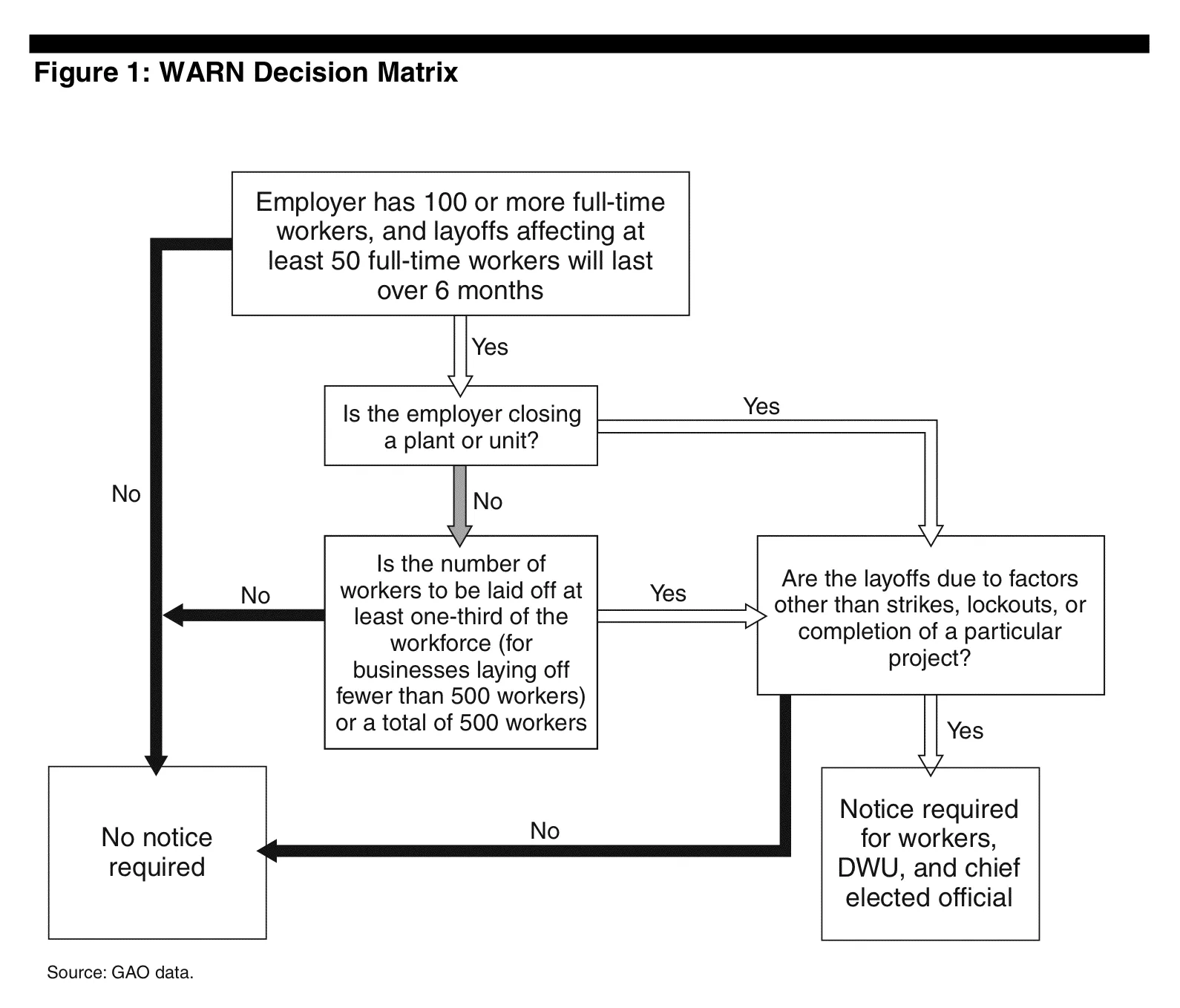
Why did Yellow avoid paying 60 days' back wages to laid-off workers?
Yellow Corp. is not liable for failing to give 60 days' advance notice to its 22,000 union employees ahead of mass layoffs in July 2023, according to a June 29 ruling from the U.S. District Court in Delaware. The court affirmed that the bankrupt less-than-truckload carrier qualified for a "faltering company" exception to federal WARN Act requirements. The ruling eliminates what could have been hundreds of millions in back-pay claims against the estate, preserving more funds for secured creditors and priority employee claims like accrued PTO.
U.S. District Judge Jennifer L. Hall wrote that Yellow met the faltering company exception and that the WARN Act notice Yellow issued in July 2023 was sufficient to invoke that exception. The ruling affirmed a bankruptcy court decision from earlier this year that found Yellow was a "liquidating fiduciary" winding down affairs, not an operating business, at the time of the layoffs.
The bankruptcy court had previously ruled Yellow didn't qualify under the faltering company exception due to a technical error (the actual layoff notices issued to employees weren't detailed and didn't fully explain why the company was closing). The district court corrected that finding, saying Yellow did satisfy the requirements.
What Yellow employees might still collect
The ruling affirmed that Yellow was an employer under New Jersey law at the time of the layoffs, meaning New Jersey employees may still be entitled to limited payouts under state law. The court did not quantify those amounts. The bankruptcy court had previously said that if it was found incorrect on its view of the WARN requirements, back pay and benefits should be limited to just 14 days, not the 60 days requested.
Employee claims for PTO and sick time have been classified as priority and will be paid when the estate transitions to a liquidating trust for final distributions.
The timeline that killed Yellow
Yellow terminated 3,500 nonunion employees on July 28, 2023, and 22,000 union employees two days later. The company filed for bankruptcy on August 6, 2023.
Yellow previously said its demise was accelerated when the Teamsters union issued a strike notice over missed benefits contributions. The carrier said it had always been able to work out a deferral plan with its health and pension funds in the past and thought it could again reach a deal. While a work stoppage was called off hours ahead of implementation, Yellow said the damage was done as its customers had already diverted freight to competitors.
The collapse removed roughly 12% of nationwide LTL capacity overnight. Regional carriers like Saia and XPO absorbed much of that volume through 2024 and into 2025, with Saia alone adding 216 terminals by mid-2026.
Pension fight still unresolved
The U.S. Supreme Court decided June 29 not to take up Yellow's pension withdrawal liabilities case. Employers party to multiemployer pension plans are required to pay their allocable share of unfunded vested benefits when exiting a plan.
Yellow and its largest shareholder, MFN Partners, previously argued that the multiemployer pension plans were fully funded after receiving federal bailout money in 2021, leaving Yellow with no withdrawal liability. Yellow also argued that if it does have liability, the calculations used by the pensions and federal regulators were incorrect.
Yellow has agreed to terms with most of the multiemployer pension plans it once contributed to on behalf of employees. It is still at odds with three different plans. Litigation over those claims is scheduled to conclude in September.
What the ruling means for the estate
The WARN Act ruling removes a major contingent liability from the bankruptcy estate. Had the court ruled the other way, Yellow could have owed 60 days of back pay and benefits to 22,000 union employees, a figure that would have run into the hundreds of millions of dollars and subordinated other creditor claims.
The bankrupt estate is expected to soon transition to a liquidating trust so final distributions can be made. Secured creditors and priority employee claims (PTO, sick time) will be paid first. Unsecured creditors, including vendors and fuel suppliers who extended credit to Yellow in its final months, will receive cents on the dollar.
For small fleets and owner-operators who hauled for Yellow or competed with it, the ruling is a footnote. The capacity Yellow removed from the market in July 2023 has been absorbed. Spot rates in LTL lanes where Yellow once dominated have normalized. The pension fight and final estate distributions will play out through fall 2026, but the operational impact on freight markets ended two years ago.