Box Truck Fleets Get Drivers Pulled at Double the Rate of Tractor Fleets
FMCSA roadside data shows box truck operators face driver-out-of-service orders 7.6 times per hundred inspections versus 4.1 for tractor fleets. The gap sits in two categories: driver fitness and controlled substances.


Why do box truck fleets get more driver-out-of-service orders than tractor fleets?
Box truck fleets get a driver pulled off the road 7.6 times per hundred inspections. Tractor fleets run 4.1. That is nearly double on the same roads, with the same enforcement, under the same criteria. A driver-out-of-service order has nothing to do with the machine. It means the person behind the wheel had no business there: an invalid or missing license, a disqualification, a medical card that does not check out, or hours run past the legal limit.
The iron is not the story. Box truck fleets get a vehicle put out of service 17.2 times per hundred inspections. Tractor fleets run 19.4. On vehicle maintenance, the broad measure of whether the equipment is roadworthy, the box trucks again came in lower than the big rigs. The driver is the problem, and the federal regulations are written in a way that all but guarantees it.
The 26,001-Pound Line Creates the Gap
The line for a commercial driver's license (CDL) is 26,001 pounds. Almost every box truck on an American street is built to exactly 26,000 pounds, one pound under. The line for federal safety regulation is lower, 10,001 pounds, and that one catches most box trucks. A 24,000-pound delivery truck is not unregulated. It still owes a DOT number, hours of service (HOS), a medical card, driver qualification files, the works. What it does not require is drug testing or a CDL. The CDL is the hook the testing program hangs on.
People hear "no CDL" and assume "no rules." That is the gap. There is no pre-employment drug screen, no random testing, nothing. That does not make it legal to drive high or drunk. It just changes how you get caught. The cop is the test.
Driver Fitness and Controlled Substances Violations Are Two and a Half Times Higher
When you break the inspection record into the federal safety categories, the box truck disadvantage shows up in exactly two places.
The first is Driver Fitness, which covers licensing, medical certification, and disqualification. Box truck fleets have a violation rate two and a half times that of tractor fleets and an out-of-service rate more than three times that of tractor fleets.
The second is Controlled Substances and Alcohol, where box truck fleets run more than two and a half times the rate of the tractor fleets. About three-quarters of these citations are roadside findings, an officer catching it at the window under 49 CFR 392.4 and 392.5, not a failed test. There is no test. The drug findings, operating while in possession or under the influence, outnumber the alcohol findings roughly four to one. The single largest category is a driver operating under the influence of drugs.
On hours of service, the tractor fleets are worse. This makes sense because these non-CDL commercial motor vehicles (CMVs) are short-haul exempt. On unsafe driving, the two are about even. On maintenance, the tractors are worse. The box truck penalty is not spread across the board the way a general quality problem would be. It sits almost surgically in the two categories that measure fitness to hold the wheel. That is what a hiring problem looks like.
The Clearinghouse Does Not Cover Box Trucks
The drug and alcohol testing program, including the federal Clearinghouse, is built around the CDL. The Department of Transportation (DOT) says straight out that non-CDL operations are not subject to the Clearinghouse and should not even register with it. A box truck outfit hiring a driver for a 26,000-pound truck has no duty to run a query, and the system tells it to stay out. No testing, no database check, no record following the driver in the door.
It gets worse because the agency's own guidance creates a trap. An employer whose CDL holders run only non-CDL trucks may run a Clearinghouse query, but is not required to when they hold a CDL but don't operate CDL equipment. If someone ran that query and it came back as prohibited, the employer would be barred from allowing that driver to operate either a real commercial vehicle or a non-CDL one until he cleaned up his record. So the prohibition legally covers the box truck. A driver flagged for drugs or alcohol is not supposed to be in one, but the required check, the only thing that would surface the flag, attaches to CDL equipment. The prohibition follows the driver. The mandatory check follows the truck. They don't meet, and the unscreened driver lives in the space between them.
CDL Downgrade Rule Funnels Prohibited Drivers Into Box Trucks
Since late 2024, a driver who lands in prohibited status has their CDL downgraded by the state to a regular license. The enforcement action meant to get a drug-or-alcohol driver off the road instead hands him the exact license a box truck or a fifteen-passenger van requires, in the one corner of the industry that runs no test and checks no database. The downgrade rule is the legal door out. Both empty into the same parking lot, and it is full of small trucks.
Drop under 10,001 pounds into the cargo van and the light shuttle, and the vehicle is not even a commercial motor vehicle by definition, so the prohibition may not reach it at all.
Passenger Carriers Show the Same Pattern
Among passenger carriers, the small van and limo operators, the tier that needs no commercial license, get a driver put out of service 2.4 times per hundred inspections. The big bus and motor coach fleets that do require a CDL run 0.5. The license-exempt tier is parked due to driver problems at roughly five times the rate of the licensed tier. The pattern holds, and it is sharpest where the cargo is people.
Seven States Leave Intrastate Box Trucks Outside Both Driver Qualification and Drug Testing
Everything so far is the federal picture, which governs freight that crosses a state line. Freight that loads and delivers inside one state falls under that state's rules, and the states are all over the map.
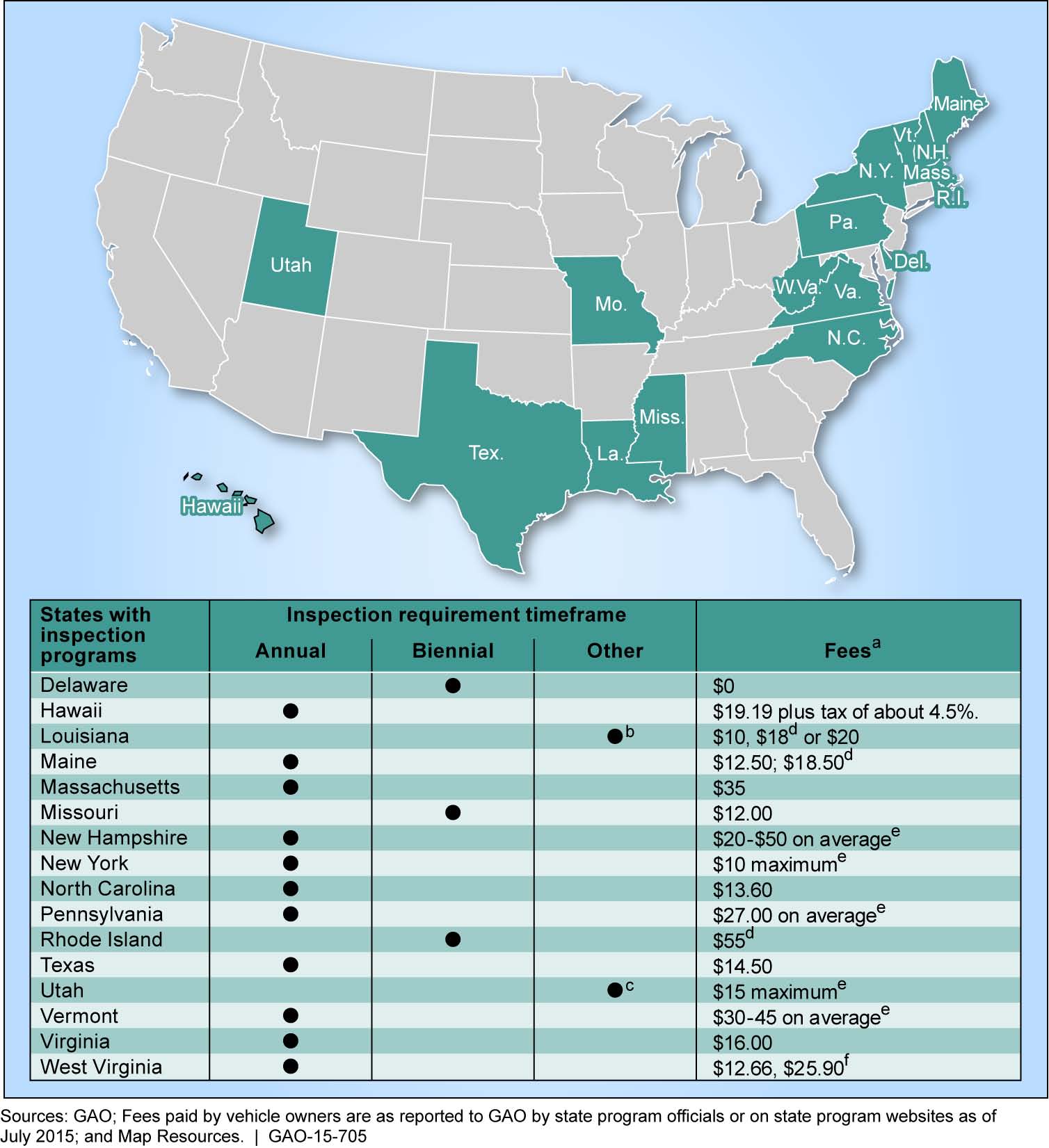
About half the states apply their driver qualification rules only above 26,000 pounds for intrastate work, which leaves the box truck under that line outside the requirement entirely. Ten states have not adopted the federal drug and alcohol testing rules for intrastate carriers at all: Delaware, Hawaii, Iowa, Kansas, Missouri, North Carolina, Rhode Island, South Dakota, Tennessee, and Vermont.
Cross those two lists, and you get the deepest pocket, seven states where an intrastate box truck escapes both driver qualification and drug and alcohol testing in one shot. Delaware, Iowa, Missouri, North Carolina, South Dakota, Tennessee, and Vermont.
FMCSA data puts a number on that pocket. More than 1,400 box truck fleets run intrastate across those seven states, and nearly 1,150 of them are in North Carolina alone. The bigger raw counts sit in California, Texas, New York and Florida, which hold the largest intrastate box truck populations, but California and a few others close the gap by regulating their drivers no matter the weight. The exposure is worst where a large intrastate fleet meets a state that allows it to run unscreened, and North Carolina is the clearest case in the file.
Last-Mile Delivery Settled Into the Tier With the Thinnest Driver Oversight
Last-mile delivery, the warehouse-to-doorstep business that exploded over the last decade, is mostly intrastate. The package crosses the state line in a long-haul trailer, then moves locally on a light truck that never leaves the state. The fastest-growing segment of American freight settled into the tier with the thinnest driver oversight.
Federal crash data tells the rest. Between 2016 and 2020, fatal crashes involving the lightest class of large trucks, the 10,001 to 14,000-pound range that includes box trucks and delivery vans, rose 44 percent. Fatal crashes involving the heaviest trucks, over 26,000 pounds, fell 2 percent. The trucks we fear most and regulate hardest got safer. The little ones we wave past got deadlier.
Amazon Freight Appears on Nearly 3,900 Box Truck Fleet Inspections
The shipper named most often on box truck fleet inspections, by a wide margin, is Amazon, appearing on nearly 3,900 inspections across more than 1,500 carriers. That is the delivery service partner model in a single number, one retailer's freight on fifteen hundred little box truck companies, the liability scattered across all of them. Behind it, the list reads like a receipt for modern life: Home Depot, Lowe's, Costco, Walmart, Best Buy, and the furniture and mattress economy that barely existed at this scale ten years ago, Mattress Firm, Ashley, Wayfair.
One retailer's freight, fifteen hundred separate box truck companies, and not one of them with the retailer's name on the door.
Propane and Industrial Gas Haulers Run Thousands of Sub-26,000-Pound Trucks
Propane and industrial gas haulers are among the heaviest users of less-than-26,000-pound trucks in the data, including AmeriGas, Suburban Propane, NuCO2, and NexAir, with AmeriGas alone running well over 2,000 less-than-26,000-pound assets as part of its 6,000-asset fleet. That is placarded hazardous material on bobtail trucks in the same sub-26,000-pound class as everything else here. The screening questions from the hazmat story and the box truck story turn out to be the same questions about the same trucks.
What Small Fleets Need to Know
If you run box trucks under 26,001 pounds, you are not exempt from federal safety regulation. You owe a DOT number, hours of service, a medical card, and driver qualification files. What you do not owe is drug testing or a CDL requirement. That gap is where the driver-out-of-service problem lives.
If you operate intrastate in Delaware, Iowa, Missouri, North Carolina, South Dakota, Tennessee, or Vermont, check your state's rules. You may be outside both driver qualification and drug testing requirements entirely. That does not make it legal to hire an unqualified or impaired driver. It just means the only thing standing between that driver and a roadside out-of-service order is whether he gets stopped.
If you hire drivers with a CDL who only operate non-CDL equipment, you are not required to run a Clearinghouse query, but you may. If you run the query and it comes back prohibited, you cannot put that driver in any commercial vehicle, CDL or non-CDL, until he clears the return-to-duty process. The prohibition follows the driver. The mandatory check follows the truck. They do not meet unless you make them meet.
The roadside inspection data is clear. The box truck driver problem is not about the truck. It is about who you let drive it.