Nuevo León Adds Two Border Crossings, 10,000 Daily Trucks at Colombia
Mexican state targets $17 billion in border infrastructure as daily freight movements jump from 800 to 10,000 since 2022. New industrial zones near crossings aim to cut drayage miles for U.S. manufacturers.


How many trucks cross Nuevo León's Colombia bridge daily now?
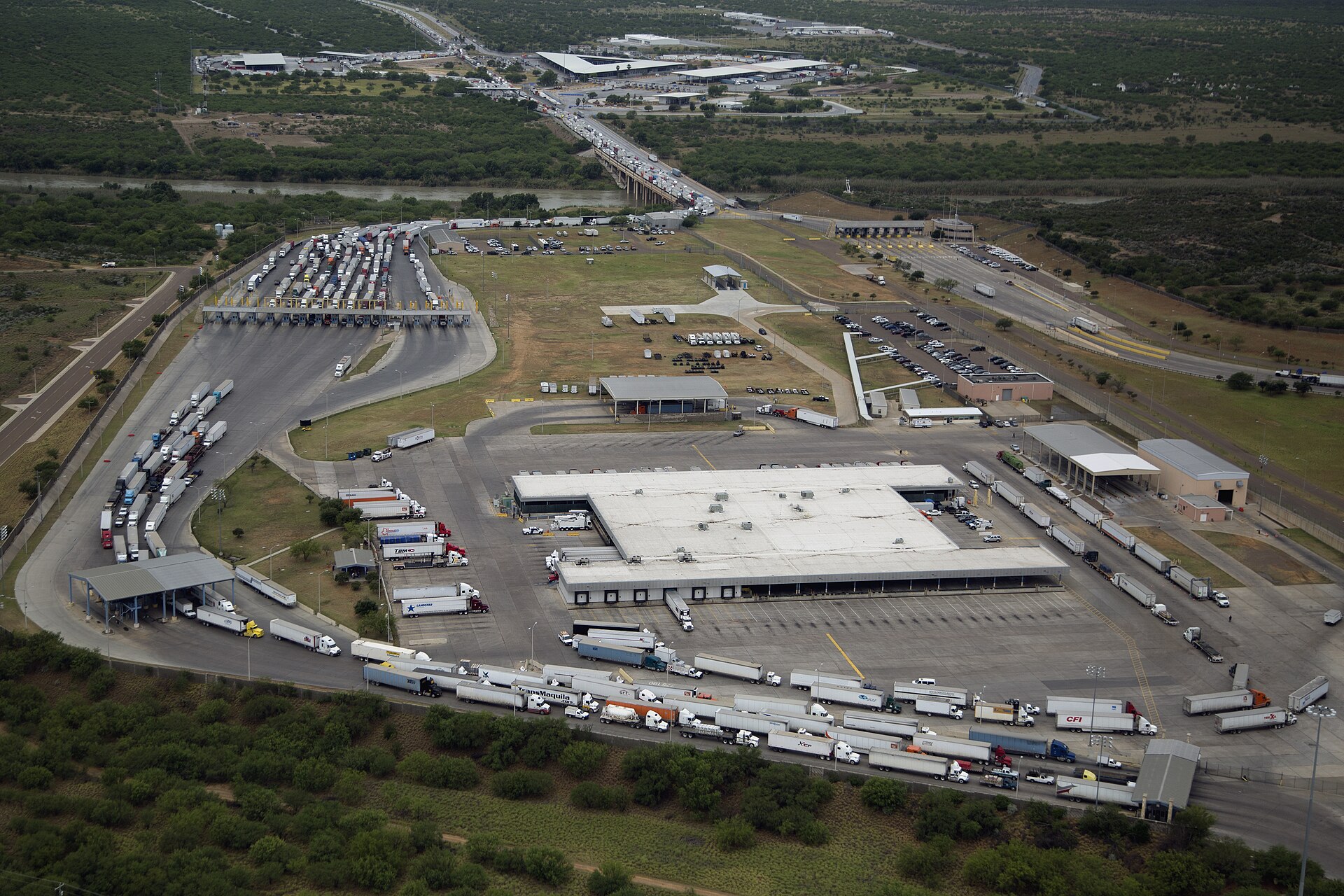
Nuevo León's Colombia-Solidarity International Bridge handled more than 10,000 daily freight movements in 2026, up from roughly 800 per day in 2022, according to Gov. Samuel García. The state is adding two border crossings and a 40-hectare industrial zone at the Colombia crossing to handle the surge.
García announced the expansion Thursday at the North American Development Bank Summit in San Antonio. The two new crossings (one freight-dedicated, one part of the proposed Green Corridors project) represent $17 billion in infrastructure investment. The state is betting the capacity will support nearshoring manufacturers who want to assemble in Mexico and ship back to Texas without the 150-mile drayage run to Monterrey.
What's the new industrial zone near the Colombia crossing?
Nuevo León plans to open a roughly 40-hectare (99-acre) industrial zone adjacent to the Colombia crossing and new highway infrastructure. The site is part of the Mexican federal government's Plan México initiative, which offers tax incentives for companies in designated industrial zones.
García pitched the location directly to U.S. manufacturers whose primary business is assembling products in Mexico and returning them across the border. "If any Texan, if any U.S. or any of you want to invest, but your main purpose is to assemble and return to the U.S., it does not make sense to go all the way up to Monterrey," García said. Warehousing development is already increasing around the border, he said.
The state is also developing a larger 988-acre industrial zone in Pesquería, near Kia and Ternium automotive plants. García said approximately 400 Tier 1, Tier 2, and Tier 3 suppliers from the U.S. and Asia are clustered around the area's automotive operations.
How much freight does Nuevo León handle?
The state accounts for about 14% of Mexico's imports and exports, García said. Advanced manufacturing, automotive, and logistics are the three largest industries. Nuevo León has added seven highways and expanded airport infrastructure, increasing direct flights to the United States by about 40.
García said the state has attracted $135 billion in foreign direct investment during roughly four years of his administration, compared with $11 billion during the previous governor's six-year term. The Monterrey metropolitan area's population has reached roughly 6 million, while the number of vehicles has grown from about 2 million to 3.5 million over the past decade.
The governor framed the infrastructure push as part of tightening economic ties between Nuevo León and Texas, particularly along a trade corridor connecting Monterrey with Laredo, San Antonio, Houston, and Dallas. García said Nuevo León wants to further integrate what he called the "Gold Triangle" between Monterrey, Houston, and Dallas.
What security measures does Nuevo León deploy for freight?
García emphasized security as a critical component of the state's strategy for attracting foreign manufacturers and logistics companies. "Every company we invite to Nuevo León, the first thing they ask is, what about safety?" García said.
The state has expanded its police capabilities with an aviation division containing 10 helicopters and a heavy-duty division with 100 trucks. Nuevo León stations law enforcement personnel near border crossings and deploys roughly 200 to 300 officers to patrol major highways. The strategy is intended to reassure manufacturers, carriers, and investors that freight can move safely between industrial areas around Monterrey and the Texas border.
"With the border and the new highways, you can go directly to Laredo and you don't have to leave Nuevo León to go to the U.S.," García said.
How integrated is Nuevo León with Texas manufacturing?
García cited Tesla as an example of cross-border supply-chain integration. Although geopolitical uncertainty paused the company's proposed Monterrey factory, roughly 200 Tier 2 suppliers arrived in the region following Tesla's original announcement. García said about 65% of the components used in Tesla's Model Y produced in Austin come from Monterrey-area suppliers.
"That's how deep we are connected with Texas," García said. "If both winners share technology, share companies, share this cooperation, I think that the best is yet to come."
Nuevo León is attempting to evolve from one of Mexico's traditional industrial centers into a hub for electric vehicles, artificial intelligence, data centers, cybersecurity, and other advanced technologies, García said.
What this means for cross-border carriers
The Colombia crossing's jump from 800 to 10,000 daily movements in four years signals tightening capacity at existing ports of entry. Two additional crossings could ease congestion, but the timeline for the freight crossing and Green Corridors project remains unspecified. García described the projects as representing $17 billion in investment but did not break out individual costs or completion dates.
For carriers running cross-border lanes between Texas and Mexico, the new industrial zone near Colombia could shorten drayage miles for loads that currently run to Monterrey warehouses. Whether the tax incentives and border proximity attract enough manufacturing volume to justify new terminal investment depends on how quickly the federal Plan México zones fill and whether the two new crossings open on schedule.
Nuevo León's security deployments (10 helicopters, 100 heavy-duty trucks, 200 to 300 highway patrol officers) address the first question every U.S. manufacturer asks, according to García. Whether that level of enforcement holds as freight volumes scale will determine how many carriers are willing to run regular lanes through the state versus sticking to established routes through Laredo and other Texas crossings.