Tesla Semi targets Europe deliveries by end-2027, 342-mile range
Nevada plant will build European trucks rated at 88,185 pounds GCW, 1.61 kWh per mile. Demos start first half of 2027.

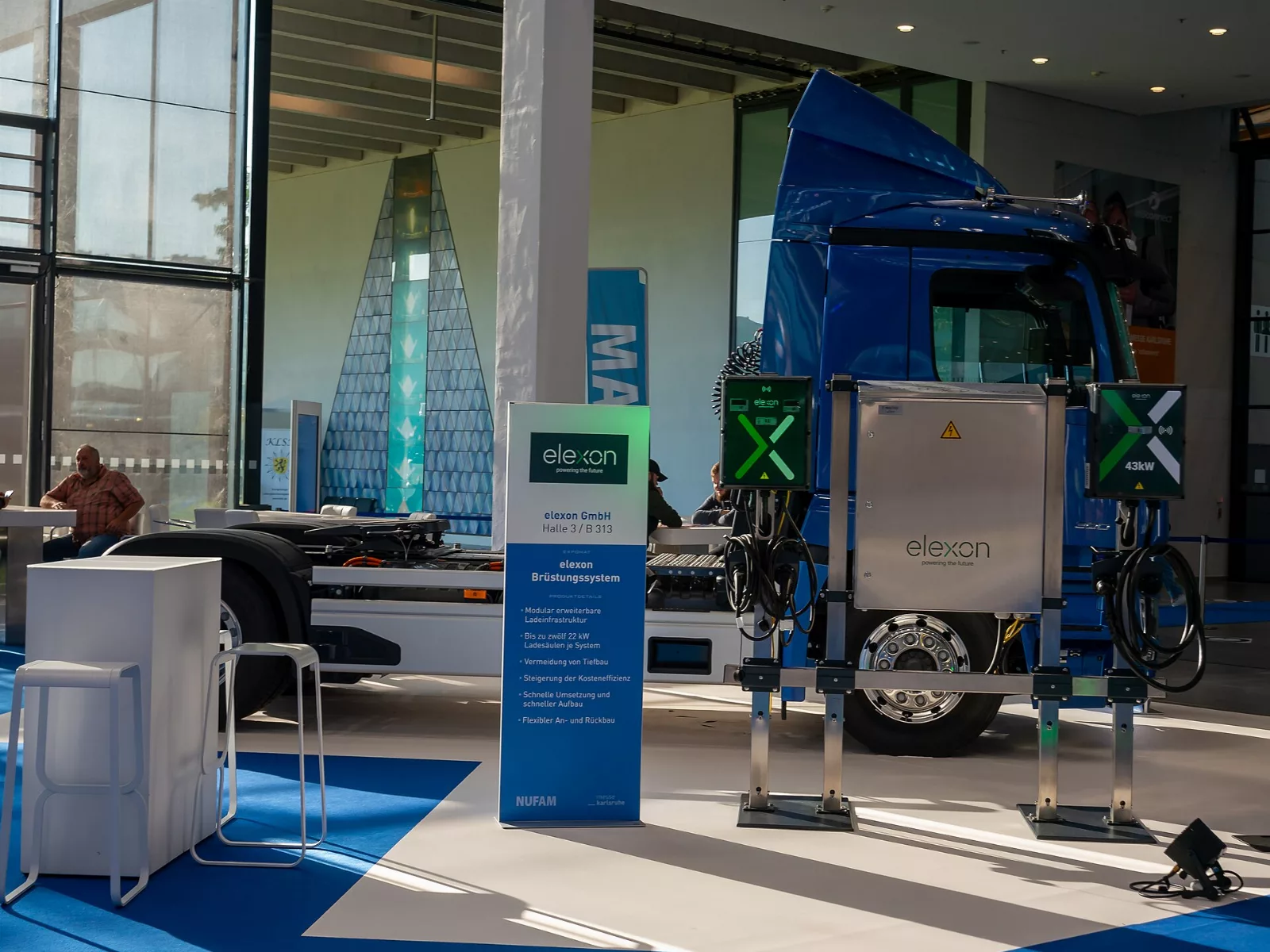
Tesla will begin European demonstrations of the Semi in the first half of 2027 and is targeting customer deliveries by the end of that year, Dan Priestley, head of Semi at Tesla, said at IAA Transportation 2026 in Hannover. The first European trucks will be built at the company's plant outside Reno, Nevada.
When does the Tesla Semi start shipping in Europe?
Tesla is lining up demonstration customers for the first half of 2027, with deliveries targeted by the end of 2027. The European order book is not yet open. Chargers are on sale now, but the truck is still in the demonstration-customer phase.
What are the European Semi's specs?
The European Semi is rated at 550 kilometers of usable range, about 342 miles, and consumption of 1 kilowatt-hour per kilometer, or about 1.61 kilowatt-hours per mile. Both figures are measured at 40 metric tons gross combination weight, or 88,185 pounds. That is heavier than the 82,000-pound rating Tesla uses on the North American truck. Curb weight is 9,100 kilograms, about 20,060 pounds.
The truck accepts 800 kilowatts of charge. Priestley said that recovers more than 60% of range in 30 minutes, about 300 kilometers or 186 miles. The tractor is designed to run up to 44 metric tons, about 97,000 pounds, for drayage and container work.
Underneath, the European truck is the North American standard-range Semi, which Priestley put at 325 miles. Europe's 342-mile rating at the higher weight is the same hardware on a different test cycle, not a longer-range pack. Tesla did not announce a European long-range model.
What's different on the European truck?
The frame rails, chassis, battery pack, and drive axles are the same as the North American truck. The wheelbase is identical. What changes is homologation: European lighting requirements, a tachograph, a slightly different trailer interface, splash guards.
One requirement goes in the opposite direction. European regulators permit camera-monitor systems in place of mirrors, so the Semi's side-arm cameras feed displays on the interior pillars and dash. U.S. trucks still carry mirrors.
The Semi runs three axles, one more than the European norm. Two of them are driven: the rear axle geared for highway cruise, the mid axle for power and torque. Priestley said the drivetrain shifts work between them without driver input, which lets Tesla hit the consumption figure on the smallest possible battery.
How does the three-axle truck handle in tight spaces?
The cab puts the driver in a forward center seating position behind wraparound glass, which Priestley said is critical in tight urban areas. Independent front suspension gives the three-axle truck the maneuverability of a two-axle truck, he said. Priestley said the truck fits the turning circle and will work in the variety of European environments.
What's the European charging rollout?
Tesla will open its European Megacharger rollout next year with more than 100 stalls equipped with the Megawatt Charging System, each capable of 1.2 megawatts. Transport Topics reported at least 22 European charging locations. While that figure is counting sites, Priestley's count centers on stalls.
For depots that do not need fast charging, Tesla sells the Basecharger, a 120-kilowatt post with the power electronics built into the unit and no separate cabinet. It is listed at 17,000 euros, about $19,500, and three can be daisy-chained and split to 40 kilowatts each. The chargers are on sale now.
What's the Semi's service record so far?
The Semi fleet has run more than 28 million kilometers, about 17.4 million miles, Priestley said. Customers have driven 19 million of those kilometers, about 11.8 million miles, on regional delivery, linehaul and duty cycles in between. That customer figure includes 400,000 kilometers, about 249,000 miles, on a demonstration fleet Tesla lends to prospects for a few weeks at a time to test against their own operations. He put uptime this year at 98%.
Tesla runs dedicated Semi service centers in North America and will stand up the same structure in Europe, Priestley said. He tied that to more than a decade of training high-voltage technicians. The demonstration program doubles as a way for prospects to see how the service side works before they commit.
What about autonomy?
When asked about autonomy after the keynote, Priestley said Tesla is concentrating on driver assistance and safety features and is using human-driven trucks to gather training data toward eventual full autonomy. He set no date for full autonomy on the Semi.
A large articulated vehicle is a related but different problem from a passenger car, he said, and Tesla is carrying over the systems and training architecture behind the supervised Full Self-Driving software on the car side. Priestley framed the near-term work around driver confidence in what the truck tells them.
Will Tesla build a European plant?
The Nevada plant is designed for 1,000 trucks a week, or 50,000 a year, and is already building trucks intended for customers. Priestley said Tesla would open it to customer visits the following week, timing that matches a Sept. 24 customer event in Sparks, Nevada. That capacity, he said, is why a European plant is not on the table yet.
"We're not worried about that at this time. We're focused on launching in North America right now," Priestley said. "We've got ample capacity to support our initial wave, but whenever it makes sense, we'll look at various localization efforts to stand up whatever's needed."
What this means for European fleets
European fleets interested in the Semi will need to wait through a demonstration phase before they can take delivery. The truck is the same hardware as the North American standard-range model, rated on a different test cycle. The 342-mile range at 88,185 pounds GCW is the number to plan around, not the 500-mile long-range pack Tesla sells in North America. The charging infrastructure is rolling out ahead of the truck, but the depot Basecharger at $19,500 is the only piece with a price tag so far. The Megacharger network will matter for linehaul work, but Tesla has not published European Megacharger pricing or access terms.