AI Freight Up 2%, Consumer Freight Down 10%, The Split Economy
Every percentage point of year-over-year freight growth traces to AI infrastructure. Strip that out and beverage, housing, and auto freight are all negative.


Why is freight volume up but consumer loads down?
Freight volumes are up roughly 2% year over year, but that growth is entirely concentrated in a single corner of the economy. Every percentage point of that gain can be traced to shipper verticals tied to the physical buildout of artificial intelligence infrastructure: electrical goods wholesalers, machinery manufacturers, and fabricated metal product producers such as server rack makers. Strip out those verticals, and the rest of the freight economy is flat to negative.
The divergence is stark on the consumer side. Beverage production peaked in late 2023 and early 2024 and has since fallen more than 10%, a drop notable for its lack of historical precedent. Single-family housing is at its weakest forward-construction reading since late 2022 and early 2023. Existing home sales are the worst since 2011 or 2012. Auto sales came in at a seasonally adjusted annualized rate of 15.5 million units in October, well below the pre-COVID baseline of roughly 17 million. That shortfall of 1.25 million to 1.5 million vehicles per year at an average price of $50,000 translates directly to missing freight.
What's killing housing and auto freight?
Housing affordability is a central drag. When adjusting the Case-Shiller Housing Index for the change in mortgage rates, buying a home today costs approximately 2.25 times what it did in 2019, with average prices exceeding $400,000 and mortgage rates around 7%. Wage growth has not come close to matching that increase, suppressing household formation and the freight demand that comes with it.
For a small fleet running furniture, appliances, or building materials, the math is simple: fewer new households means fewer loads. The forward-construction reading for single-family housing hasn't been this weak in two years. That's not a temporary dip. That's a structural shift in where freight volume lives.
Auto sales tell the same story. The October rate of 15.5 million units annualized is 1.5 million vehicles short of the pre-COVID norm. At $50,000 per vehicle, that's $75 billion in consumer spending that didn't happen, and every one of those missing vehicles represents missing parts shipments, missing finished-vehicle hauls, and missing aftermarket freight.
Why did beverage freight drop 10%?
Beverage production peaked in late 2023 and early 2024 and has since fallen more than 10%. Alcohol wholesaler sales surged to record levels by July 2020 and remained strong through 2021 and into 2022, only to slide sharply thereafter. Two drivers stand out.
First, GLP-1 drug adoption. The weight-loss drugs that entered the market in 2022 and 2023 appear to be cutting alcohol consumption, particularly beer. Breweries are seeing the sharpest declines. For a carrier running beverage loads, that's a 10% volume haircut with no clear bottom in sight.
Second, tariff retaliation. U.S. alcohol exports have fallen sharply after Canadian provinces banned American alcohol outright in response to tariff policies. That cross-border market is gone, and it was significant. For carriers running northbound loads out of the Midwest or Pacific Northwest, those lanes dried up.
What's actually driving the 2% freight gain?
The entire 2% year-over-year freight gain comes from AI infrastructure buildout. Electrical goods wholesalers, machinery manufacturers, and fabricated metal product producers such as server rack makers are shipping at record volumes. Hyperscalers (Amazon Web Services, Microsoft Azure, Google Cloud, Oracle) are spending hundreds of billions on data center construction, and every dollar of that capital expenditure generates freight.
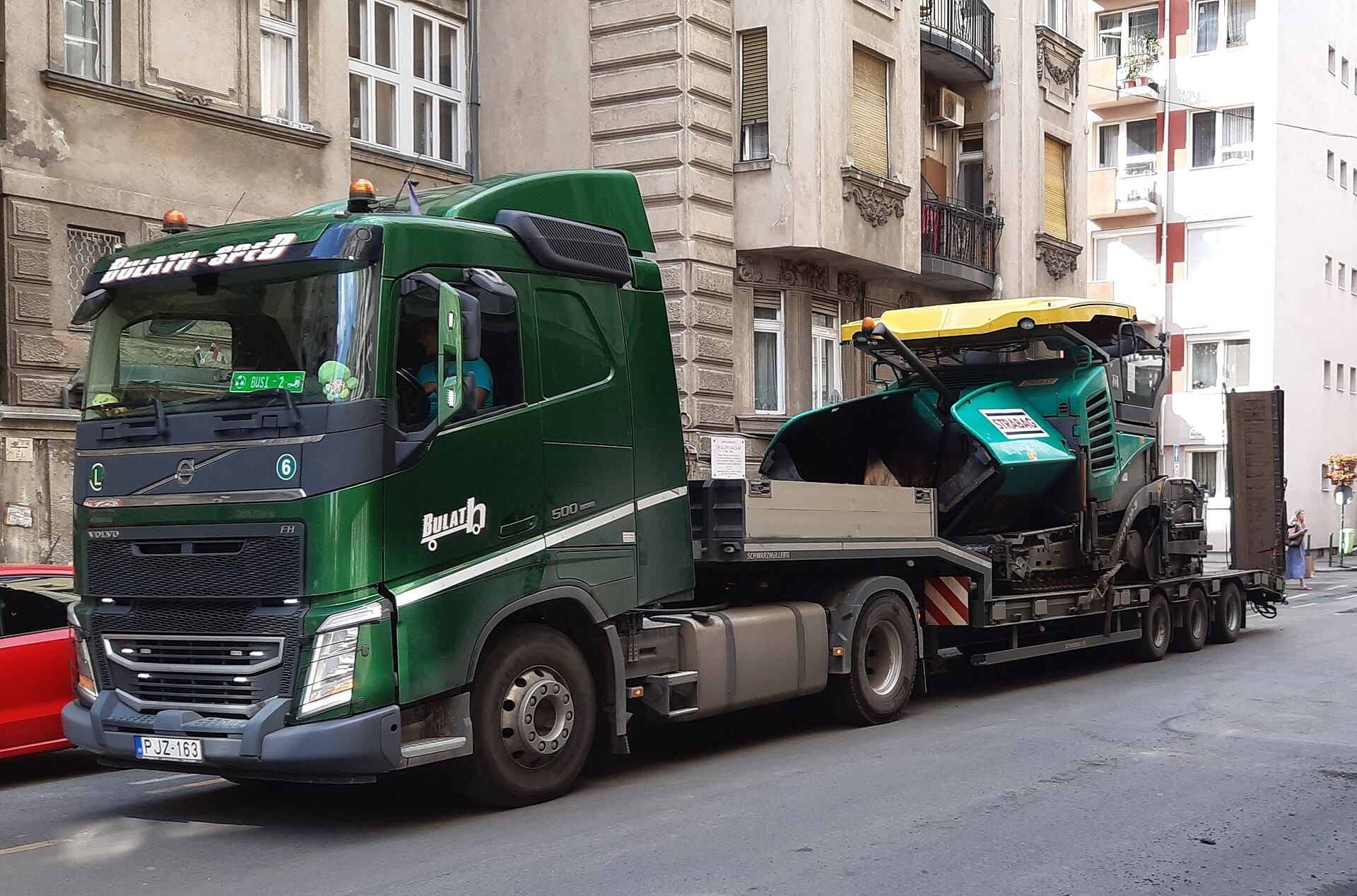
For carriers running flatbed, heavy haul, or specialized equipment, that's where the volume is. Server racks, electrical switchgear, cooling systems, and backup generators are moving. But that freight is concentrated in specific lanes and requires specific equipment. A dry van carrier running consumer goods sees none of it.
The risk: this boom depends entirely on whether OpenAI and Anthropic can demonstrate the revenue needed to justify continued hyperscaler capital expenditure. "Those are the two companies as the frontier AI labs that are really anchoring this boom," Dr. Jason Miller said, "because if they cannot make the revenue, then your Oracles of the world cannot justify the hundreds of billions of CapEx that they're planning." If AI revenue disappoints, the only freight growth in the economy disappears.
Are imports actually strong?
Strength is concentrated in industrial goods rather than consumer products. Top year-over-year containerized import gains are coming from categories such as plastic products, aluminum plates, and steel products from South Korea. The latter prompted formal investigations from the American Iron and Steel Institute. Some of the apparent year-over-year import strength also reflects how weak the comparable period was in 2024, when tariff uncertainty suppressed consumer goods imports including toys.
For drayage carriers and intermodal operators, the mix matters. Industrial imports move differently than consumer goods. They're heavier, they require different handling, and they don't follow the same seasonal patterns. A carrier that built its network around retail imports is seeing different volume than a carrier running steel and aluminum.
What happens when the Fed raises rates?
The Federal Reserve is likely to raise rates by at least 25 basis points in December, possibly 50. Higher rates will further pressure housing and autos over the first six months of next year. The stock market correction that briefly roiled AI-related equities was potentially the one development that might have kept the Fed from raising rates, but that correction didn't stick.
For a small fleet, higher rates mean weaker consumer freight for at least the first half of 2027. Housing won't recover. Auto sales won't recover. Beverage freight won't recover. The only question is whether AI infrastructure spending holds up long enough to offset those losses. If it doesn't, the 2% freight gain turns negative.
What this means for a 10-truck fleet
If you're running consumer freight (beverage, furniture, appliances, building materials), you're operating in a market that's down 10% from peak and still falling. Housing affordability isn't improving. Auto sales aren't recovering. Beverage consumption is structurally lower.
If you're running industrial freight tied to AI infrastructure, you're in the only growing segment of the freight economy. But that growth is entirely dependent on continued hyperscaler capital expenditure, which is entirely dependent on whether OpenAI and Anthropic can prove their revenue models. If they can't, the boom ends.
The data center buildout added 1.5% freight volume earlier this year, but that volume is concentrated in specific equipment types and specific lanes. For most small fleets, the K-shaped recovery means choosing which side of the split you're on. Consumer freight is shrinking. Industrial freight tied to AI is growing. There's no middle.
The Fed's rate hikes will make the consumer side worse. The only wildcard is how long AI infrastructure spending lasts. Plan accordingly.