Five States Fine Carriers for Snow on Trucks Even When Nothing Falls
Maine, New Hampshire, New Jersey, Pennsylvania, and Rhode Island enforce snow-removal laws with fines starting at $25 for commercial vehicles, regardless of whether ice or snow dislodges during transit.


Five northeastern states fine commercial motor carriers for failing to remove snow and ice from trucks before driving, even when nothing falls from the vehicle. Maine, New Hampshire, New Jersey, Pennsylvania, and Rhode Island each enforce snow-removal statutes that apply to tractor-trailers, with penalties ranging from $25 to $1,500 depending on the state and whether dislodged snow causes injury or property damage.
What are the fines for driving with snow on a commercial truck?
Maine classifies snow and ice as an unsecured load under state law. Fines range from $150 to $500. A separate Maine statute requires drivers of vehicles registered under 10,000 pounds to take reasonable measures to prevent accumulated snow or ice from falling while driving, but the unsecured-load provision applies to commercial vehicles regardless of weight.
New Hampshire enforces snow removal through its negligent-driving statute, commonly called Jessica's Law. Drivers are expected to remove snow and ice before operating a vehicle. First-offense fines run $250 to $500. Subsequent offenses carry fines of $500 to $1,000. The law does not require snow or ice to fall from the vehicle for enforcement.
New Jersey requires reasonable efforts to remove accumulated snow and ice from truck cabs, trailers, and intermodal freight containers before driving. Fines range from $25 to $75 even if nothing falls from the vehicle. If flying snow or ice causes injury or property damage, commercial vehicle operators face fines of $500 to $1,500.
Pennsylvania requires drivers to make reasonable efforts to remove accumulated snow and ice within 24 hours after snowfall or icing ends. The basic fine is $50, assessed even if nothing falls from the vehicle. Fines increase to $200 to $1,500 if dislodged snow or ice causes death or serious bodily injury. Pennsylvania law includes exceptions for commercial drivers traveling to snow-removal facilities or when removing the accumulation would violate workplace safety rules or threaten their health or safety.
Rhode Island prohibits driving with significant amounts of snow or ice that could blow off and obstruct another driver's vision. The law also prohibits accumulations that obstruct the driver's own view through windows. Natural accumulation while driving during adverse weather is exempt from enforcement.
Why states fine carriers before snow falls from the truck
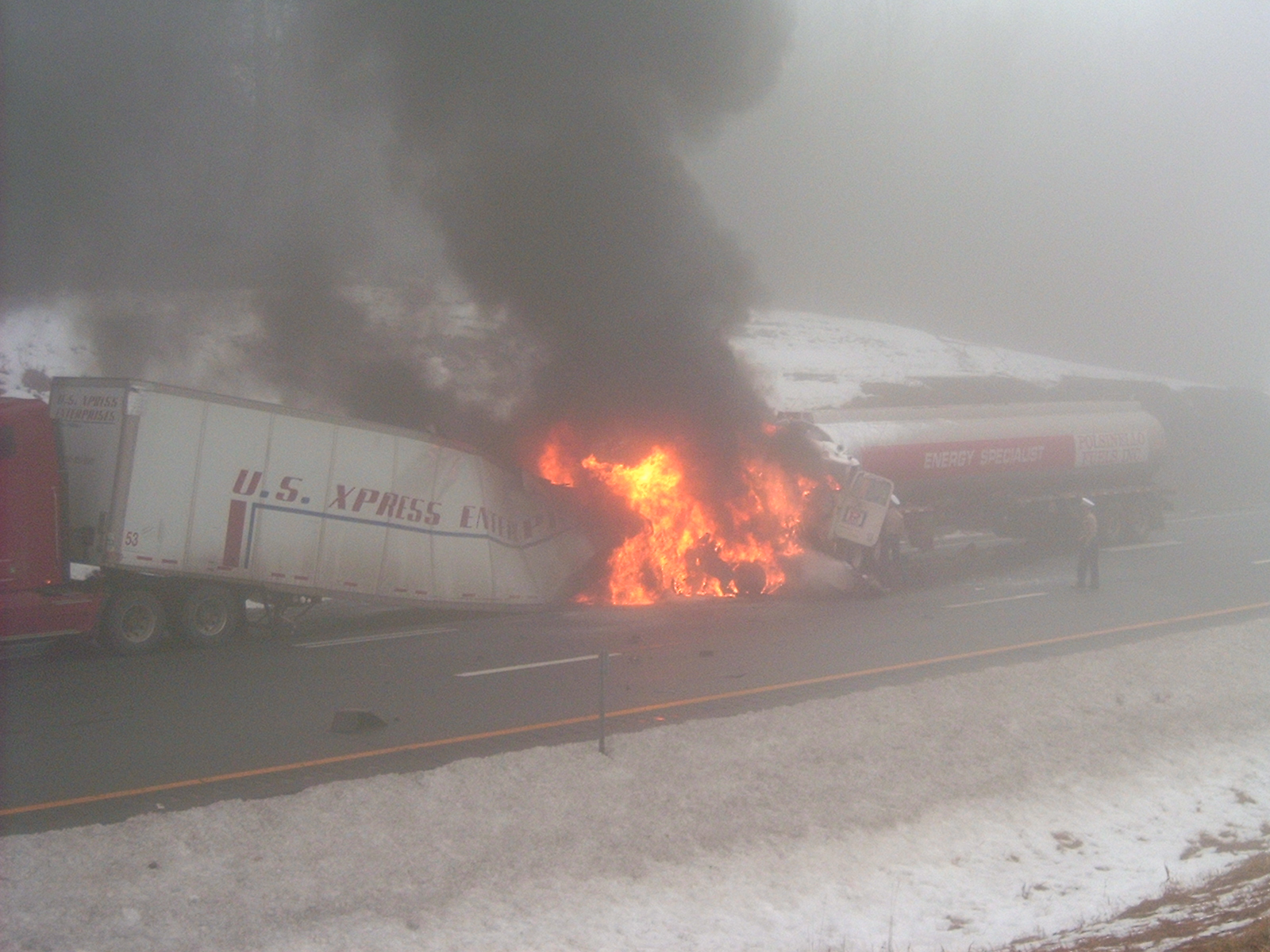
The five states enforce snow-removal laws as a preventive measure. Dislodged snow and ice can obstruct the vision of following drivers, cause multi-vehicle crashes, or strike pedestrians and other vehicles. New Hampshire's Jessica's Law is named after a woman killed in 2004 when a chunk of ice flew off a truck and crashed through her windshield.
Carriers operating in these states during winter months must budget for snow-removal time at origin, even when loads are time-sensitive. Pennsylvania's 24-hour window gives drivers a compliance margin, but Maine, New Hampshire, New Jersey, and Rhode Island enforce removal before the vehicle enters traffic.
The laws apply to all commercial vehicles, including tractor-trailers, straight trucks, and intermodal containers. New Jersey's statute explicitly names intermodal freight containers, closing a loophole that might otherwise exempt rail-to-truck transfers.
What counts as reasonable effort to remove snow
None of the five states define "reasonable effort" in statute. Enforcement is left to state troopers and local police. Carriers should document snow-removal procedures in driver files and require photographic evidence of cleared roofs, cabs, and trailers before departure during winter weather.
Pennsylvania's workplace-safety exception protects drivers who cannot safely access trailer roofs or remove ice without specialized equipment. Carriers should maintain records of facility limitations (lack of snow-removal bays, unsafe roof access) and driver safety concerns. The exception does not apply when a carrier has access to snow-removal facilities but chooses not to use them.
Rhode Island's natural-accumulation exemption applies only to snow or ice that accumulates while the vehicle is already in motion during adverse weather. Snow or ice present on the vehicle before departure is not exempt.
Compliance steps for carriers running northeast lanes
Carriers dispatching loads into or through Maine, New Hampshire, New Jersey, Pennsylvania, or Rhode Island during winter months should add snow-removal checkpoints to pre-trip inspection procedures. Drivers must clear all horizontal surfaces, including trailer roofs, cab roofs, hoods, and intermodal container tops, before leaving the shipper or truck stop.
Fleets should identify snow-removal facilities along common routes and build removal time into dispatch schedules. Pennsylvania allows travel to a snow-removal facility, but the other four states expect removal before the vehicle enters traffic.
Carriers should train drivers to photograph cleared vehicles before departure and retain images in driver qualification files. Photographic evidence supports a reasonable-effort defense if a trooper stops the vehicle after natural accumulation during transit.
Fleets operating in these states should review their cargo insurance and general liability policies. New Jersey's $500 to $1,500 fine for injury or property damage caused by flying snow or ice is separate from civil liability. A carrier that pays the state fine may still face a personal-injury claim or property-damage lawsuit.
What to add to your winter pre-trip checklist tonight
Add a snow-and-ice removal line to your pre-trip inspection form. Require drivers to initial the line and attach a timestamped photo of the cleared vehicle. Store photos in the driver's file for the current calendar year. If your fleet runs Pennsylvania lanes, document any facility limitations that prevent safe roof access and note the location of the nearest snow-removal bay. Budget 15 to 30 minutes for snow removal at origin during winter weather, and add that time to your dispatch schedule for loads moving through the five-state region.