Mexican Truckers Block California Border Over B-1 Visa Revocations
CANACAR estimates 25,000 commercial drivers lost visas over alleged cabotage violations; industry warns unclear enforcement could disrupt cross-border freight flows.


How many Mexican drivers have lost B-1 visas over cabotage violations?
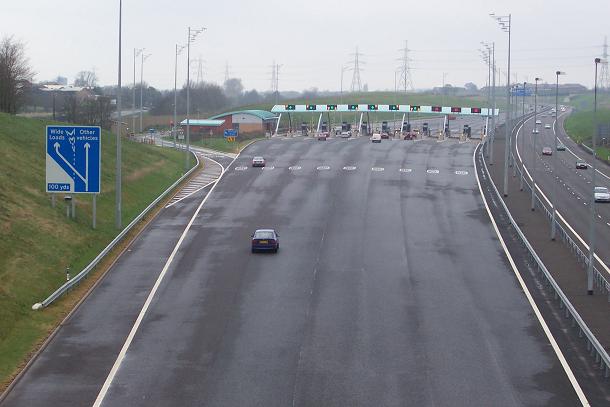
Mexican truck drivers blocked commercial traffic at the Mexicali, Mexico-Calexico East (California) border crossing Thursday, September 4, 2026, protesting B-1 visa revocations tied to alleged cabotage violations. Mexico's National Chamber of Freight Transportation (CANACAR) estimates more than 25,000 visas have been revoked from commercial drivers along Mexico's northern border, including potentially 4,000 in the Tijuana area. The figures are CANACAR estimates based on reports from members and social media, not official U.S. government statistics.
CANACAR officials say Mexican drivers are losing their visas after encounters with U.S. officials involving alleged cabotage violations, but carriers lack clear information about how eligibility and violations are being determined at different border crossings. Cabotage generally refers to transportation between two points within the same country by a foreign carrier. Mexican truck drivers using B-1 visas are permitted to haul international freight into and out of the U.S., but generally cannot perform point-to-point domestic U.S. freight movements.
What triggered the Mexicali border protest?
Truckers protested at the Mexicali commercial port of entry over what drivers described as an increase in B-1 visa revocations. Alfonso Millán Chávez, CANACAR delegate for Tijuana, Tecate and Playas de Rosarito, said the organization had anticipated growing frustration among drivers.
"We understand the desperation of the drivers, and as a chamber and as an industry, I think we have been anticipating this over the last few months," Millán said. "There hasn't been a week when we haven't raised the issue with various authorities in both Mexico and the United States."
CANACAR officials in neighboring Tijuana have urged drivers there not to stage similar blockades, warning that shutting down additional border crossings would increase the economic impact. Millán called for Mexico's Interior Ministry and Ministry of Foreign Affairs to intervene with U.S. authorities, saying the dispute ultimately requires a binational solution.
"My hope is that it does not extend to Tijuana," Millán said of the protests. "The idea is that we be cautious with this issue."
What counts as cabotage under B-1 visa rules?
Disagreements can arise over what constitutes a prohibited domestic movement in the U.S., including how officials treat the movement of empty trailers. Millán said interpretation varies by officer and crossing.
"Sometimes we have had problems with the interpretation, for example with an empty trailer," Millán said according to El Sol de Tijuana. "The empty trailer is there to be loaded with merchandise, and some officers interpret the empty trailer as merchandise."
Millán said CANACAR wants U.S. authorities to establish protocols for visa actions involving suspected cabotage and provide reliable statistics showing how many drivers have lost their visas. The organization has sought information from the U.S. Embassy in Mexico and U.S. State Department.
Ismael Reyes de la Rosa, a CANACAR official in Mexicali, has also raised concerns about how U.S. officers are handling B-1 visas at the border, as drivers seek greater clarity over what activities could trigger cancellation or revocation.
How visa revocations affect cross-border freight
Israel Delgado, CANACAR's vice president for Mexico's northwest region, has warned that visa losses could affect time-sensitive shipments including medical products, technology, food and perishables moving from Mexico into the U.S.
The visa dispute is beginning to ripple beyond trucking companies. José Luis Contreras Valenzuela, president of the Association of Industrialists of Mesa de Otay, said the situation has contributed to delays in incoming supplies and deliveries of finished products.
Federico Serrano Bañuelos, president of Index Zona Costa, said companies that outsource transportation services are particularly exposed. Business groups are seeking to elevate the issue to Mexico's Ministry of Foreign Affairs for diplomatic discussions with U.S. officials, according to El Sol de Tijuana.
The dispute comes as cross-border freight activity in the Tijuana region is already below previous peaks. Millán recently said roughly 3,000 export trucks are crossing daily, compared with as many as 4,500 during stronger periods. He said freight volumes fell nearly 30% in 2025 before improving somewhat this year.
English proficiency enforcement less urgent in Tijuana
Millán said English-language proficiency enforcement, another recent concern for Mexican drivers operating in the U.S., has become less of an immediate problem locally. He said CANACAR had not recently received reports of drivers being placed out of service for English proficiency violations.
"The current challenge is the revocation of visas for cabotage issues," Millán said, adding that such violations are sometimes interpreted "in a very drastic way."
The State Department resumed trucker visa processing earlier this year under stricter CDL, English, and safety-history requirements after an eight-month overhaul. U.S. Customs and Border Protection (CBP) now blocks Mexican truckers with cabotage violations at the border using Department of Transportation (DOT) records, a practice that began in mid-2026 after CBP and DOT merged databases to flag drivers with prior violations.
What cross-border carriers need from U.S. officials
CANACAR is seeking meetings with U.S. and Mexican officials to establish clearer protocols governing visa revocations tied to alleged cabotage. The organization wants U.S. authorities to provide reliable statistics showing how many drivers have lost their visas and to standardize how officers interpret cabotage rules across different border crossings.
Without clear guidance, carriers cannot train drivers on what movements trigger enforcement or predict which crossings apply stricter interpretations. The lack of official statistics also makes it difficult for carriers to assess the scope of the problem or plan for capacity reductions.
Mexican trucking companies depend on B-1 drivers to move international freight across the border. Industry leaders warn that unclear or inconsistent enforcement of cabotage rules could reduce available cross-border capacity and trigger additional protests at major commercial gateways. CANACAR has consistently favored dialogue over actions that interrupt cross-border commerce, but the Mexicali protest signals that drivers' patience is running out.