$104M verdict lands on MVT after driver fell asleep, killed co-driver
El Paso jury found Mesilla Valley Transportation and its trainer responsible for 2020 crash that killed Orlando Robles in sleeper berth.


What did the jury award in the MVT wrongful death case?
An El Paso jury awarded $104 million to the family of Orlando Robles, a Mesilla Valley Transportation driver killed when his trainer fell asleep at the wheel in 2020. The verdict came down after a trial that began June 30. Robles' son received $20 million in compensatory damages and $7.5 million in punitive damages. The remaining $76.5 million went to Robles' wife, estate, mother, and daughters.
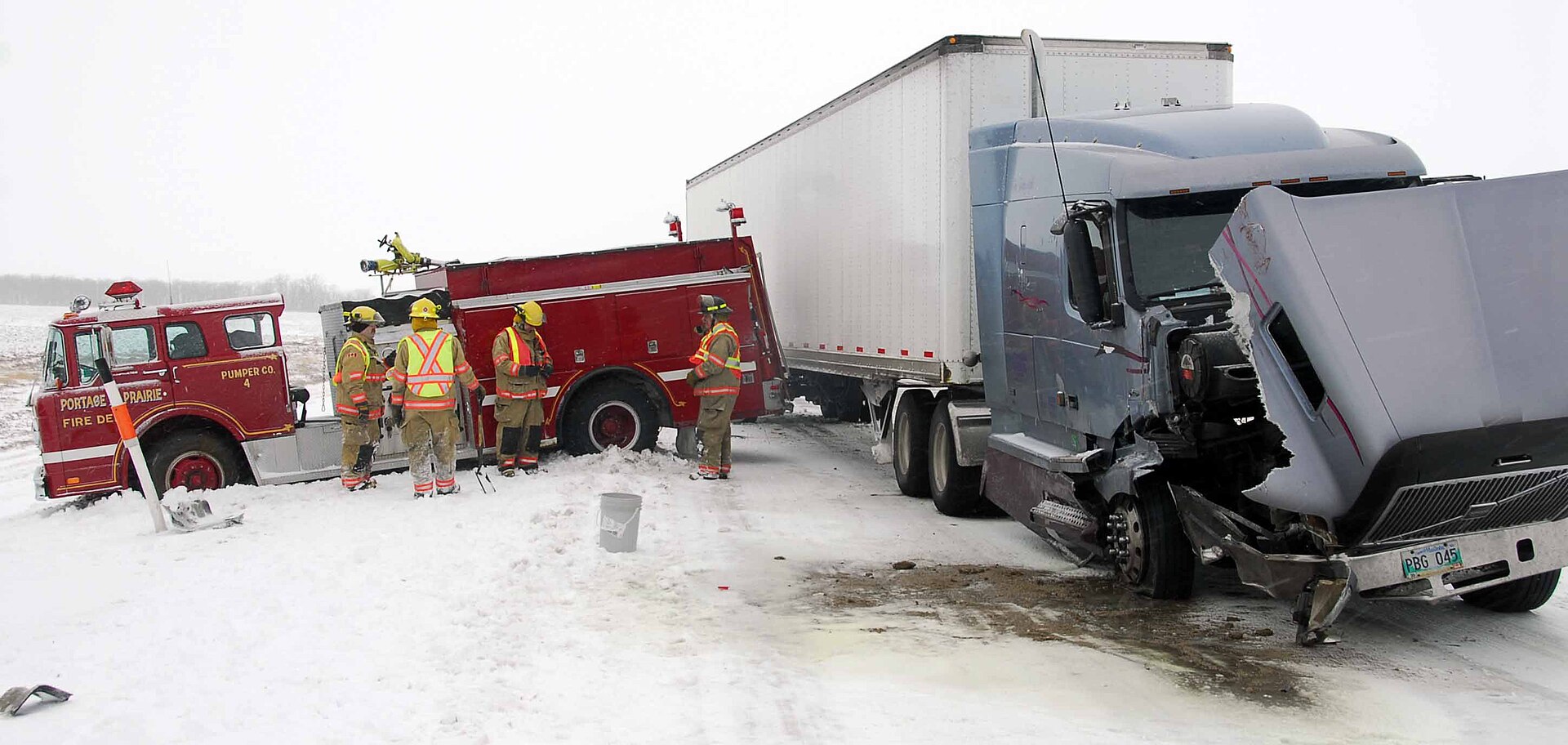
Jurors found that MVT driver and company trainer Juan Garcia fell asleep while driving a tractor-trailer on Interstate 40 in Sequoyah County, Oklahoma. The truck drifted onto the shoulder and struck a parked box truck displaying emergency flashers. Robles was asleep in the sleeper berth when the collision occurred.
Why this verdict matters for carriers
The $104 million figure is one of the largest wrongful death verdicts against a U.S. truckload carrier in recent years. For context, MVT operates over 1,600 trucks and 5,000 trailers out of Las Cruces, New Mexico, and El Paso, making it one of the largest privately-owned truckload carriers in the country. A verdict of this size will hit the carrier's insurance premiums and likely ripple through the broader liability insurance market.
Small fleets already face nuclear verdict exposure on the same roads as large carriers. The difference: a 5-truck operation cannot absorb a $100 million judgment, even with $1 million in liability coverage. Most owner-operators carry $1 million in auto liability because that is what brokers require. A verdict like this one reminds underwriters that sleeper-berth crashes involving trainers carry catastrophic exposure, which translates to higher premiums across the board.
The trainer liability angle
Garcia was not just a driver. He was a company trainer. That detail matters in court. When a trainer falls asleep and kills a trainee or co-driver, plaintiffs' attorneys argue the carrier failed to vet, monitor, or remove a fatigued instructor from the road. The jury's $27.5 million award to Robles' son alone (compensatory plus punitive) suggests they found MVT's oversight lacking.
"Professional truck drivers and trucking companies have a responsibility to keep fatigued drivers off the road. When that responsibility is ignored, families pay the price," Alejandro Acosta III, a partner at Tawney, Acosta & Chaparro and attorney representing Robles' son, said in a statement.
MVT issued a statement acknowledging the verdict: "We want to take a moment to address the recent jury verdict concerning the tragic accident involving two of our drivers. Our hearts continue to go out to the families affected by this tragic accident. This loss has had a profound impact on all of us. While we respect the judicial process, we are evaluating our appellate options."
The carrier did not specify whether it plans to appeal or settle.
What small fleets can learn
The crash happened in 2020. The verdict came down in 2024. That four-year gap is typical for wrongful death litigation. During that time, the carrier's insurance reserves were likely tied up, premiums climbed, and the case hung over operations. Small fleets cannot afford that exposure.
Three operational takeaways:
Driver monitoring. Annual MVR checks leave carriers blind to suspended licenses for up to 11 months. Real-time monitoring services cost $5 to $15 per driver per month but flag license suspensions, DUIs, and moving violations within days. If a trainer has a pattern of speeding or hours-of-service violations, annual MVR checks leave carriers blind to suspended licenses for 11 months, and the carrier may not know until the next annual pull.
Sleeper-berth crashes. When a driver is asleep in the berth and the truck crashes, the sleeping driver's family can sue the carrier and the at-fault driver. The jury does not care that the victim was also an employee. They see a preventable death.
Punitive damages. The $7.5 million in punitive damages awarded to Robles' son signals the jury believed MVT acted with gross negligence or willful disregard. Punitive damages are not covered by most commercial auto policies. The carrier pays those out of pocket.
The insurance math
Most small fleets carry $1 million in auto liability coverage because that is the broker minimum. Some carry $2 million or $5 million. Almost none carry $100 million. When a verdict exceeds policy limits, the carrier is personally liable for the difference. MVT is large enough to survive a $104 million judgment, assuming the case settles on appeal for a fraction of the verdict. A 10-truck fleet is not.
Nuclear verdicts (verdicts over $10 million) have climbed steadily since 2015. Insurers respond by raising premiums, tightening underwriting, and dropping carriers with poor safety scores. A carrier with a CSA Unsafe Driving BASIC percentile above 65 or a history of preventable crashes will pay 30% to 50% more for the same coverage than a clean carrier.
What happens next
MVT said it is evaluating appellate options. Most wrongful death verdicts settle on appeal for 20% to 50% of the jury award. The carrier's insurer will likely negotiate a settlement to avoid years of additional legal fees and the risk that an appeals court upholds the verdict.
For small fleets, the lesson is not to avoid hiring trainers or team drivers. The lesson is to monitor driver behavior in real time, pull MVRs more than once a year, and understand that a single preventable fatality can end the business. The jury in El Paso made that clear.