Arizona Scale House Uses License Plate Readers to Reconstruct Driver's Multi-State Trip
Roadside camera networks and automated plate readers let enforcement officers rebuild a driver's timeline from Louisiana to Arizona, then match it against paper logs. The technology is already deployed.


How do roadside cameras track a driver's route across state lines?
An Arizona Department of Public Safety officer reconstructed a driver's entire multi-state trip using license plate readers and roadside cameras at scale houses, then compared the automated timeline to the driver's paper logs. The driver, who posted a video account of the inspection on June 4, 2026, said the officer told him he had been tracked through Louisiana, Texas, New Mexico, and Arizona with timestamps at each checkpoint. The officer presented the timeline during a routine scale-house stop.
The driver was running paper logs. The automated camera network captured his plate at each scale and weigh station along the route. When the officer pulled the data, the system displayed the driver's actual location history with date and time stamps. The driver said the officer laid out the entire trip, state by state, and asked him to explain discrepancies between the camera record and his logbook entries.
The driver described the encounter in a video posted to YouTube under the channel Sage Outcast. He said he did not expect the level of detail the officer had access to and that veteran drivers he spoke with afterward were equally surprised by the scope of the tracking.
What enforcement technology is FMCSA using at scale houses?
FMCSA (Federal Motor Carrier Safety Administration) does not operate the camera networks directly. State DOT (Department of Transportation) agencies and state police departments run automated license plate reader systems at weigh stations and scale houses. The systems capture every commercial vehicle plate that passes through, log the timestamp and location, and store the data in databases accessible to enforcement officers during inspections.
Many states share plate-reader data through interstate compacts and regional enforcement networks. An officer in Arizona can query a plate and retrieve hits from Louisiana, Texas, and New Mexico if those states participate in the same data-sharing agreement. The technology has been in use at high-volume scales for several years, but adoption has accelerated as states upgrade weigh-station infrastructure with federal MCSAP (Motor Carrier Safety Assistance Program) grant funding.
The plate readers do not replace ELD (electronic logging device) inspections. Officers still check ELD data or paper logs during Level 1 and Level 2 inspections. The camera timeline serves as a cross-check. If a driver's logs show he was off-duty in El Paso at 2:00 PM but a plate reader captured his truck in Albuquerque at 2:15 PM, the officer has grounds to dig deeper into the logbook.
Does this affect drivers using ELDs?
Yes. ELD data is harder to falsify than paper logs, but drivers and carriers have been caught editing duty status or manipulating personal conveyance and yard move exceptions. The plate-reader timeline gives enforcement a second data source. If an ELD shows a driver in personal conveyance mode for 200 miles across three states, but plate readers show the truck passing through commercial scales during that window, the officer can challenge the personal-conveyance claim.
FMCSA has revoked 67 ELD devices in the past 16 months for failing technical specifications or enabling data manipulation. Carriers using a side-by-side review of ELD options should verify that their device remains on the FMCSA registered list and that the provider has not been flagged for compliance failures. A revoked ELD puts the carrier out of service immediately.
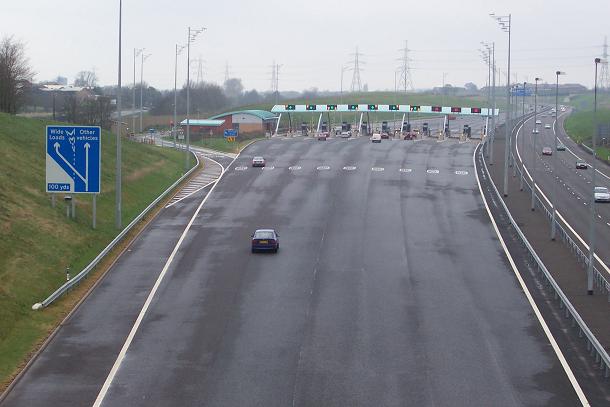
Plate readers also flag trucks that bypass scales. If a driver takes an exit before a weigh station and re-enters the highway after the scale, the next downstream reader will show a gap in the timeline. Officers use the gap as a bypass indicator and may pull the truck at the next checkpoint.
What violations can plate-reader data support?
Plate-reader timelines can support HOS (hours of service) violations, false logbook entries, and scale-bypass citations. If the camera record shows a driver traveled 600 miles in 8 hours but his logs claim he was off-duty for 4 of those hours, the officer can issue an HOS violation and a logbook falsification citation. Logbook falsification carries a minimum $1,000 fine and adds 7 CSA (Compliance, Safety, Accountability) points in the HOS Compliance BASIC (Behavior Analysis and Safety Improvement Category). A carrier with multiple logbook violations can trigger an FMCSA compliance review.
Scale bypass is a separate violation. Most states require commercial vehicles over 10,000 pounds GVWR (gross vehicle weight rating) to enter open weigh stations. A driver who exits before the scale and re-enters after it can be cited for failure to stop at a weigh station. Fines range from $100 to $500 depending on the state. Repeat offenders face higher fines and potential out-of-service orders.
Plate-reader data does not directly change CSA scores. The violations the data supports (HOS, logbook falsification, scale bypass) carry the CSA points. But the data makes those violations easier to prove. An officer who can show a driver's truck at three scales in four states in six hours has a stronger case than one relying on the driver's word against the logbook.
What states are using plate readers at scales?
Most western states have deployed automated plate readers at high-volume weigh stations. Arizona, California, Nevada, New Mexico, Texas, and Colorado all use the technology. Louisiana, Arkansas, and Oklahoma have plate readers at major interstate scales. Midwestern and eastern states are adding readers as they upgrade weigh-station infrastructure, but deployment is uneven. Some states share data through regional compacts; others keep databases internal.
FMCSA does not publish a list of states using plate readers. Carriers can assume that any scale house with overhead gantries or camera poles at the entrance has plate-reader capability. The cameras are often mounted on the same structures as PrePass or Drivewyze transponder readers.
What should carriers and drivers do?
Carriers running paper logs should assume every scale captures their trucks' plates and timestamps. Paper logs must match the actual route and timeline. A driver who takes a 10-hour break in Amarillo must be able to show he was in Amarillo for 10 hours if an officer pulls plate-reader data. Falsifying a paper log is no longer a low-risk gamble. The camera network makes discrepancies easy to spot.
Carriers using ELDs should audit personal-conveyance and yard-move entries weekly. If a driver logs 150 miles of personal conveyance in a single day, the safety manager should verify the trip was legitimate. Plate readers will flag the truck at every scale it passed, and an officer will ask why a personal trip required crossing three states on an interstate highway.
Drivers should not attempt to bypass scales. The downstream plate reader will capture the truck anyway, and the bypass citation adds to the carrier's CSA score. If a scale is closed or the PrePass signal is green, the driver is clear. If the scale is open and the signal is red, the driver must enter.
Carriers preparing for a compliance review should pull their own plate-reader data if the state makes it available through a public-records request. Some states provide commercial vehicle operators with access to their own plate history. Comparing the plate record to ELD data before an audit can surface discrepancies the carrier can fix before FMCSA sees them.
The compliance takeaway
The Arizona scale-house encounter shows that enforcement officers already have access to automated tracking tools that reconstruct a driver's route across multiple states. The technology is not experimental. It is deployed at weigh stations on major freight corridors, and officers are using it during routine inspections. Carriers and drivers who assume paper logs or ELD edits will go unnoticed are operating on outdated assumptions. The camera network is live, the data is queryable, and the timeline it produces is admissible evidence for HOS violations and logbook falsification.
Small fleets should verify that every driver understands the scope of roadside tracking. A driver who thinks he can fudge a 10-hour break or skip a scale without consequence will cost the carrier CSA points and fines. The officer at the scale house already knows where the truck was. The only question is whether the logs match.