Intermodal Volume Up 10% as Trucking Rates Push Shippers to Rail
Rail intermodal traffic jumped 10% year-over-year in the week ending May 30, driven by shippers fleeing soaring truckload rates and tender rejections.

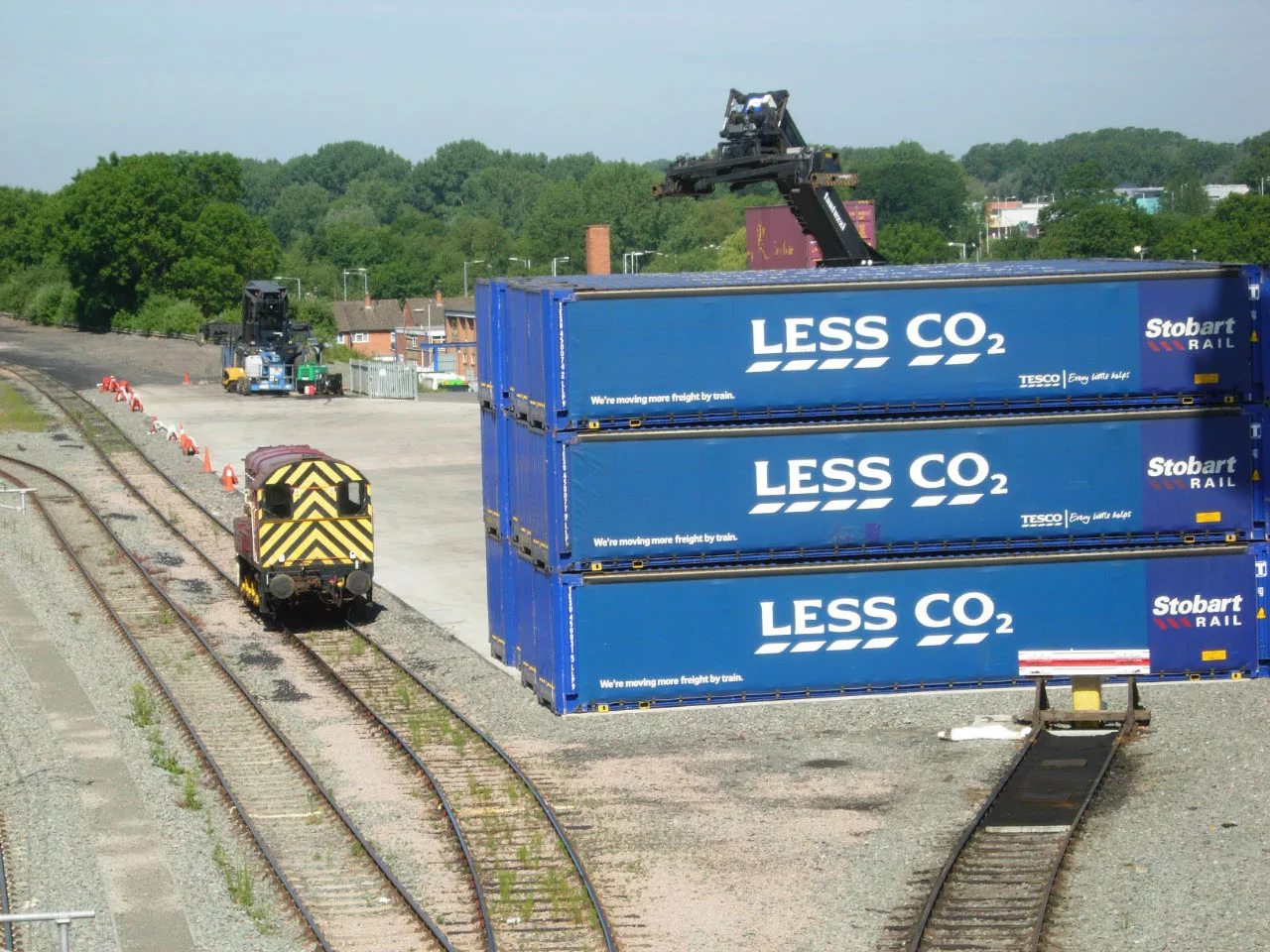
Rail intermodal traffic climbed 10% year-over-year to 264,449 containers and trailers for the week ending May 30, according to the Association of American Railroads. Total U.S. rail volume hit 492,795 carloads and intermodal units, up 7.2% from the same week in 2025.
Why are shippers moving freight from trucks to rail?
Shippers are shifting volume to intermodal to escape a trucking market where tender rejections, spot rates, and fuel costs are hitting weekly highs. The capacity squeeze stems from federal enforcement that has removed non-English speaking drivers, shut down unaccredited trucking schools, and sidelined carriers that reopen under new identities after crashes. That enforcement wave has tightened truckload supply enough to make rail competitive again on lanes where speed matters less than cost.
Intermodal's 10% year-over-year gain outpaced commodity carloads, which rose 4% to 228,346 units. For the first 21 weeks of 2026, cumulative U.S. intermodal volume reached 5,820,002 units, up 1.8% from 2025. Commodity carloads totaled 4,756,909, ahead 3.4%. Combined traffic of 10,576,911 carloads and intermodal units improved 2.5%.
Which commodities are moving by rail?
Seven of ten carload commodity groups posted year-over-year gains. Grain led with a 33.8% increase, followed by metallic ores and metals at 19.5% and motor vehicles and parts at 9.1%. A miscellaneous category labeled Other climbed 20.2%.
Coal led decliners, down 9%, alongside petroleum and petroleum products, which fell 3.4%, and nonmetallic minerals, off 2.4%. The coal drop reflects ongoing shifts away from thermal coal for power generation, while petroleum's decline tracks lower crude-by-rail volumes as pipeline capacity expands.
What the rail surge means for small fleets
Intermodal's double-digit growth signals that shippers with flexibility are choosing rail over truckload on lanes where transit time allows it. That pulls volume off the spot market and leaves remaining truckload freight concentrated in time-sensitive, short-haul, or last-mile moves where rail can't compete. For a 5-truck fleet, that means spot rates stay elevated on the lanes you can still book, but the total pool of available loads shrinks as shippers lock in rail contracts for predictable, lower-cost moves.
North American rail volume for the week, covering nine U.S., Canadian, and Mexican railroads, rose 4.9% to 690,622 carloads and intermodal units. Carloads climbed 2.7% to 336,920, and intermodal units increased 7.2% to 353,702. Year-to-date North American volume edged up 2.3% to 14,567,984 carloads and intermodal units.
The intermodal shift also changes lane economics for owner-operators. Lanes that historically moved by truck because rail service was unreliable or slow are now seeing shippers test intermodal again as capacity tightens. If rail proves reliable on those lanes, the freight may not return to truckload even when capacity loosens. That makes it harder to predict which lanes will stay hot and which will see volume evaporate as shippers lock in rail contracts for the next 12 to 24 months.
How long the rail advantage lasts
Intermodal's cost advantage over truckload depends on how long the capacity squeeze holds. Federal enforcement has removed enough marginal carriers to keep tender rejection rates elevated, but if new entrants pass vetting and return capacity to the market, truckload rates will soften and shippers will shift volume back to trucks for speed and flexibility. Rail's 10% year-over-year gain in the week ending May 30 reflects current conditions, not a permanent modal shift.
For fleets running 10 to 50 trucks, the takeaway is that shippers with rail-accessible lanes are already moving freight off the truckload market. That keeps spot rates climbing on the lanes you can still book, but it also means the freight that remains is increasingly time-sensitive or last-mile work where you compete on service, not price. If you're chasing volume on lanes where rail is an option, expect shippers to use intermodal as leverage in rate negotiations.